
🎵 Sing along with the full lyrics at LyricFind
-

-
Song written by Eric Andersen
🎵 Sing along with the full lyrics at LyricFind
(After singing, remember to hit the “back” button to return to Campfire Reunions!)Thirsty Boots
Written by Eric Andersen, 1965
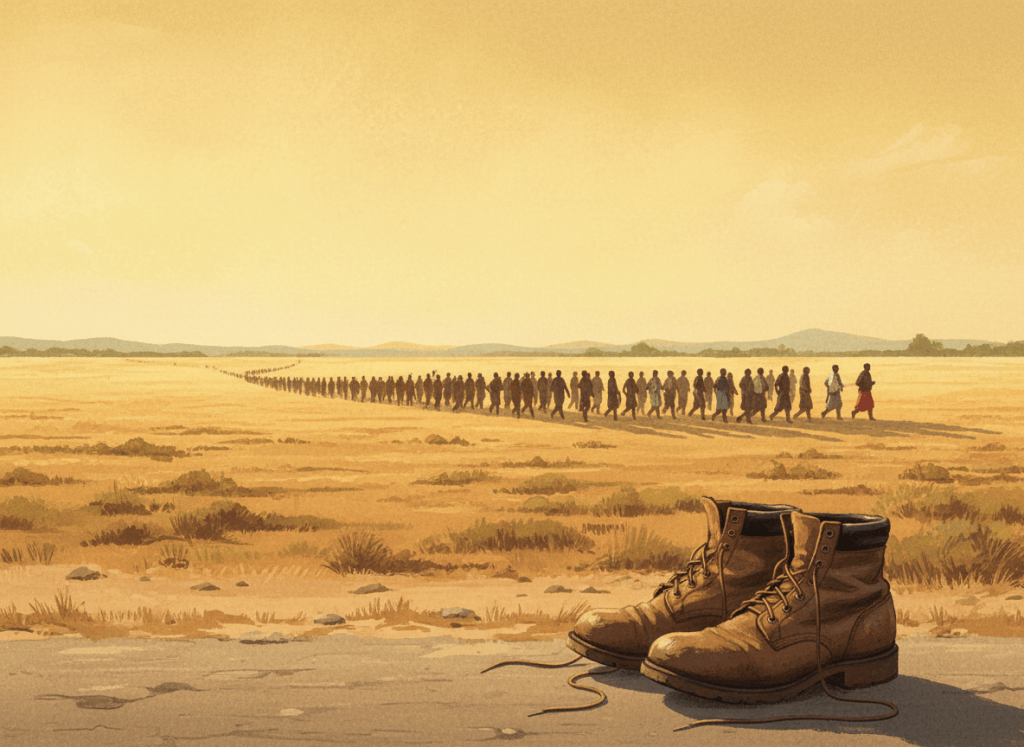
Some songs are about marching, and some are about coming home after the march. “Thirsty Boots” is one of the gentle ones, a song of welcome for someone returning tired from a hard road. Eric Andersen wrote it during the civil rights years, when young people from all over the country were traveling South to register voters and stand up for equal rights. In the liner notes of his album, he said he wrote it for a friend who had done civil rights work, adding, “Having never gone down to Mississippi myself, I wrote the song about coming back.” That’s what gives it such tenderness. Instead of describing the struggle, it offers a friend a place to sit down, rest, and be looked after for a while.
Andersen was part of the lively Greenwich Village folk scene of the early 1960s, and he made his debut at Gerdes Folk City in 1964 in a live audition for Vanguard Records. His friend and fellow songwriter Phil Ochs had a hand in the song’s beginnings. Andersen first sang part of it to Ochs in the 14th Street subway station as the two headed down to the Village, and he has said Ochs encouraged him to finish it.
The finishing touch came in a delightfully unlikely place. Judy Collins has told audiences over the years that Andersen wrote the song’s last verse on a matchbook cover while sitting in her bathroom, and Andersen tells the same story himself in the documentary Greenwich Village: Music That Defined a Generation. Collins clearly liked what came out of that bathroom. She was the first to release the song, in 1965, on her Fifth Album, a year before Andersen’s own version appeared on his 1966 album ‘Bout Changes ‘n’ Things. Her lovely, clear-voiced recording is the one many people first heard, and it helped carry the song well beyond the coffeehouses.
“Thirsty Boots” was never a hit single, but it became something longer-lasting: a song that other musicians love to sing. It’s one of Andersen’s best-known songs, and it has been recorded by John Denver, Anne Murray, and the Kingston Trio, among others. Even Bob Dylan took a turn at it. He recorded the song in 1970 for his Self Portrait album, but it was left off the final record and stayed on the shelf until 2013, when it came out on The Bootleg Series Vol. 10: Another Self Portrait. More than half a century after it was written, it’s still a quiet favorite, a song that reminds us to take care of the people who take care of the world.
-

🎵 Sing along with the full lyrics at LyricFind
“Changes” was written in 1965 by Phil Ochs, the fiery Greenwich Village folk singer who called himself a “singing journalist” — he’d actually started out studying journalism before deciding a guitar was mightier than the pen. Ochs was famous for his protest songs (“I Ain’t Marching Anymore,” “Draft Dodger Rag”), which made “Changes” a genuine shock to his audience: it contains no politics at all. Instead, it’s a quiet, aching meditation on impermanence — seasons turning, love fading, time moving — and it revealed that the movement’s sharpest topical writer was also one of its most tender poets. He introduced it on his 1966 live album Phil Ochs in Concert, and it quickly became one of his most beloved songs.
The song traveled in some surprising directions. British pop singer Crispian St. Peters (of “The Pied Piper” fame) took “Changes” onto both the US and UK charts in 1966, and folk artists like Gordon Lightfoot and Ian & Sylvia recorded it too. Strangest of all: in 1971, a Swedish version called “En Kväll om Sommarn” was recorded by Anni-Frid Lyngstad — who just a few years later became world-famous as Frida of ABBA. Ochs himself never found the fame of his friend and rival Bob Dylan, and his life ended tragically young in 1976, at just 35. But “Changes” endures as perhaps his most personal legacy — proof that the great protest singer’s deepest song was about the one thing no one can protest: time itself.
-
🎵 Sing along with the full lyrics at LyricFind
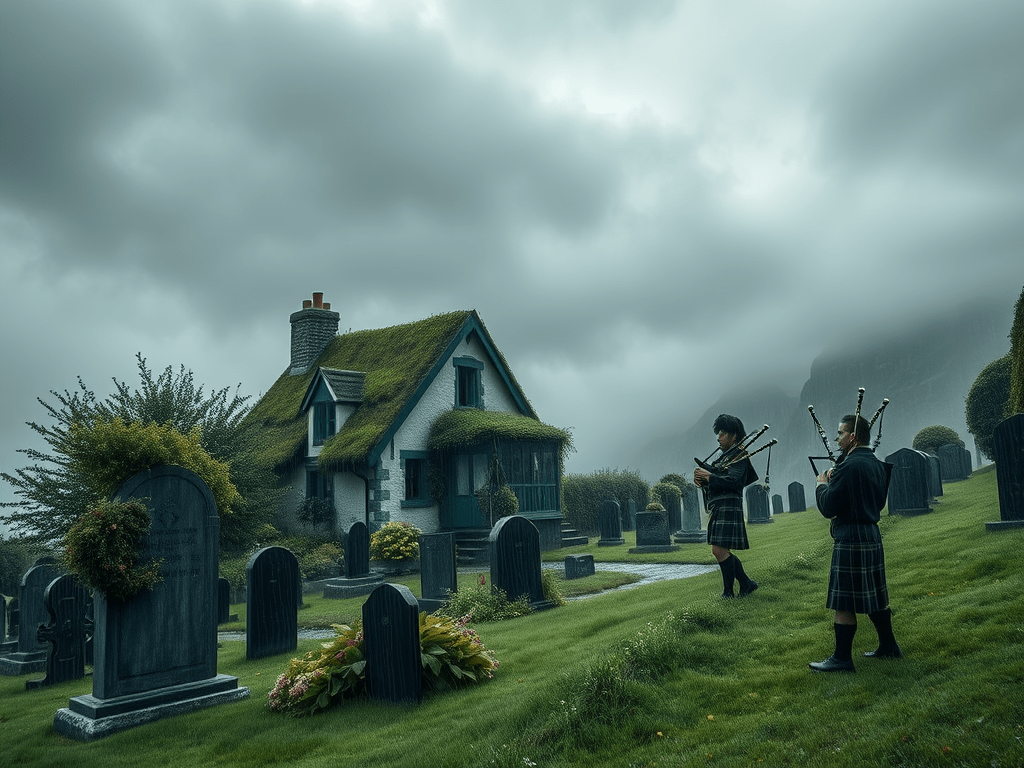
“Danny Boy,” the beloved unofficial anthem of Ireland, was written by an English lawyer — Frederic Weatherly of Bath, who reportedly never set foot in Ireland in his life. Weatherly was a barrister by day and an astonishingly prolific lyricist by night (he penned some 3,000 songs and poems), and in 1910 he wrote the words to “Danny Boy” set to a forgettable tune of his own. It went nowher
The magic arrived by mail. Weatherly’s Irish-born sister-in-law, Margaret “Jess” Weatherly, was living in a Colorado mining camp during the gold rush days when she heard Irish miners playing a hauntingly beautiful old melody called the “Londonderry Air.” She sent a transcription across the Atlantic to Frederic — and his orphaned lyrics fit the tune almost perfectly. Published in 1913, the combination became one of the most beloved songs on Earth, recorded by everyone from opera great Ernestine Schumann-Heink (the first, in 1915) to Judy Garland, Elvis Presley, Johnny Cash, and Willie Nelson.
The melody has its own romance: it was first written down around 1851 by Jane Ross of Limavady, County Londonderry, who heard an itinerant fiddler playing it outside her window. She hurriedly jotted down the notes — and when she went out to learn the musician’s name, he had vanished, never to be identified. Had she not scribbled fast, the world might never have gotten “Danny Boy” at all. So this “quintessentially Irish” treasure is really a three-way collaboration: an anonymous Irish street musician, a homesick transcription from a Colorado gold camp, and an English lawyer who never saw Ireland — proof that a great song doesn’t care about borders.
-
The lyrics below are in the public domain. The first six verses are John Newton’s, published in 1779, shown here in modern spelling. The final verse is an older traditional one that has long been sung with his hymn.
Amazing grace! How sweet the sound
That saved a wretch like me!
I once was lost, but now am found,
Was blind, but now I see.’Twas grace that taught my heart to fear,
And grace my fears relieved;
How precious did that grace appear
The hour I first believed!Through many dangers, toils and snares,
I have already come;
’Tis grace hath brought me safe thus far,
And grace will lead me home.Amazing grace! How sweet the sound
That saved a wretch like me!
I once was lost, but now am found,
Was blind, but now I see.Amazing Grace
Words by John Newton, 1772; music traditional (“New Britain”), 1829Few songs carry a story quite like this one. John Newton, the man who wrote these words, spent his early life at sea, and for years he worked in the Atlantic slave trade. As a young sailor he was in some ways a captive himself. He was left stranded on the coast of West Africa, where he was mistreated and half-starved by the trader he worked for. After he was rescued, a violent storm in March 1748 nearly sank his ship. Newton later pointed to that night as the turning point of his life.
That turning, though, was slow. Newton went on to captain slave ships for several more years before leaving the sea because of ill health. Eventually he became a clergyman in the Church of England and settled in the small market town of Olney, in Buckinghamshire. There he wrote hymns for his congregation’s weekly meetings, often to go along with that week’s sermon. He wrote this one in late 1772 for a New Year’s Day service. It was published in 1779 in a collection called Olney Hymns, which he put together with his friend, the poet William Cowper. In that book it went by a much plainer title: “Faith’s Review and Expectation.”
In his later years Newton came to speak openly against the trade he had once served. In 1788 he published a pamphlet describing its cruelties, and he became an ally of William Wilberforce in the campaign to end it. Newton lived just long enough to see Britain outlaw the slave trade in 1807, and he died in December of that same year.
The melody we sing today came from a different place and time. In England the hymn was never widely popular. In America, however, it traveled through camp meetings and shape-note singing schools, and it met its tune there. The melody known as “New Britain,” whose composer is unknown, first appeared in an 1829 songbook. In 1835 a South Carolina singing master named William Walker paired it with Newton’s words in his popular collection Southern Harmony. The two have been together ever since. The well-loved final verse that many people sing today wasn’t written by Newton at all. It came from an older hymn, and its earliest known pairing with “Amazing Grace” was in Harriet Beecher Stowe’s Uncle Tom’s Cabin in 1852.
As a hymn it never needed the charts, yet it found its way onto them anyway. Judy Collins recorded it in 1970 in St. Paul’s Chapel at Columbia University, choosing the chapel for its natural echo. Her version reached number 15 in the United States and number 5 in Britain, and it stayed on the British charts for 67 weeks. Two years later a bagpipe version by the Royal Scots Dragoon Guards went all the way to number 1 in Britain. Also in 1972, Aretha Franklin made it the title song of her live gospel album, which became the best-selling record of her career.
-

🎵 Sing along with the full lyrics at LyricFind
Bob Dylan was just 21 when he wrote this anthem — and by his own account, the first version poured out in about ten minutes one April afternoon in a Greenwich Village café. The melody wasn’t new: Dylan adapted it from “No More Auction Block,” an old spiritual sung by formerly enslaved people, which gives the song its haunting, hymn-like bones. It first appeared not on a record but in a folk magazine called Broadside, and Dylan released it on The Freewheelin’ Bob Dylan in 1963. The song even has its own scandal: a New Jersey high school student named Lorre Wyatt was rumored to have written it and sold it to Dylan — a complete myth, but one that shadowed Dylan for a decade before Wyatt publicly came clean.
But it was Peter, Paul and Mary who turned it into a phenomenon, and that happened because of a shrewd manager. Albert Grossman represented both Dylan and the trio — he had assembled Peter Yarrow, Noel Paul Stookey and Mary Travers himself in 1961, envisioning an updated version of Pete Seeger’s Weavers — and he handed his young songwriter’s tune to his hit-making group. Their version, released in June 1963, sold faster than any record Warner Bros. had ever put out, climbed to #2 on the Billboard Hot 100, and won two Grammy Awards. Overnight it made Dylan famous as a songwriter and made the trio the musical voice of the civil rights movement.
Then came the moment that sealed it. On August 28, 1963, Peter, Paul and Mary stood before a quarter-million people at the March on Washington and sang “Blowin’ in the Wind” — the same afternoon Dr. Martin Luther King Jr. delivered his “I Have a Dream” speech. Two years later they marched from Selma to Montgomery. Their activism cost them: the trio received hate mail and death threats, and kept going anyway. Decades later, Mary Travers said this was the song that meant the most to her, because its questions never stopped being current — you could open any morning’s newspaper and find one of them staring back. Perhaps the finest tribute came from Sam Cooke, who was so struck that a young white songwriter had written it that he was inspired to answer with his own masterpiece, “A Change Is Gonna Come.”
-
🎵 Sing along with the full lyrics at LyricFind
(After singing, remember to hit the “back” button to return to Campfire Reunions!)Hangman
Traditional, arranged by Peter Yarrow, Joel Hendler, Paul Stookey, Mary Travers, and Milton Okun, 1965.Nobody knows who first sang this one. It’s one of the oldest stories in the folk tradition, and it has traveled a long way to reach us.
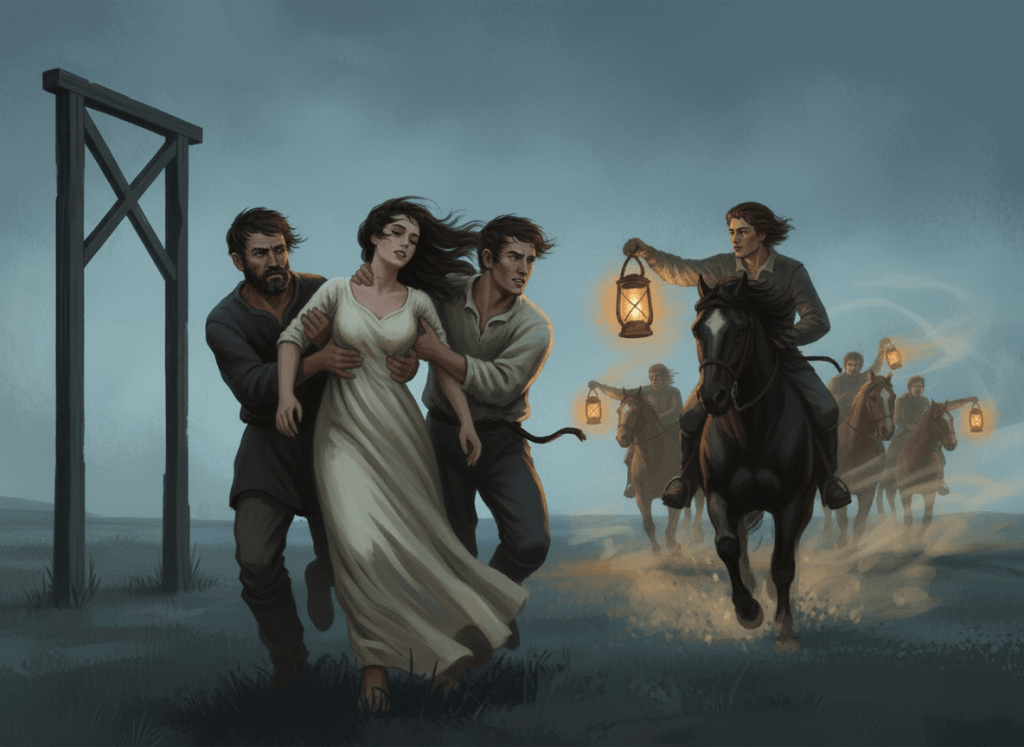
The story is simple. A young woman stands at the gallows and begs the hangman to wait a little while. She sees someone coming. One by one her family arrives, and she asks each of them whether they’ve brought silver or gold to buy her freedom. Each one has come empty-handed, and some have come only to watch. The last to arrive is her true love. Whether the ransom is paid, and whether she goes free, depends on who’s singing it. In the version by Peter, Paul and Mary, the maiden is rescued by her true love.
What’s curious is that the English-language versions never say what she did wrong. The Harvard scholar Francis James Child, who collected the old ballads of England and Scotland in the late 1800s and numbered this one Child Ballad No. 95, called the English versions “defective and distorted.” He felt they had lost the beginning of the story and kept only the ransom scene. Versions elsewhere in Europe fill in the gap: in many of them she has been captured by pirates. In an old English fairy tale called “The Golden Ball,” she is to be hanged for losing a golden ball, and her sweetheart has to go on a spooky adventure to get it back. Some scholars think the “gold” was never really about money. They suggest it stood for her good name.
The song turns up almost everywhere: English villages, the Appalachian mountains, Sweden, Germany, Hungary, Lithuania, and Finland, where about fifty versions have been collected. Americans may know it from Lead Belly, who recorded it as “The Gallis Pole” in 1939, or from Odetta. It even reached rock audiences in 1970, when Led Zeppelin recorded “Gallows Pole.”
Peter, Paul and Mary’s version was never released as a single, so it didn’t chart. The album it came from, See What Tomorrow Brings, reached No. 11 on the Billboard album chart and went gold.
-
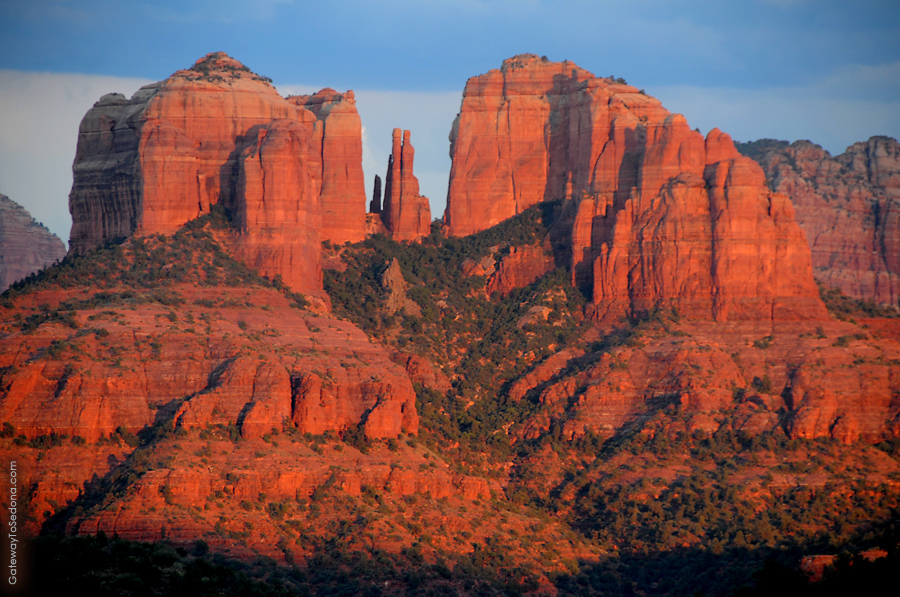
Original song by Vicky Oldham
On the road to Sedona,
In my heart the only way I know,
On the road to Sedona,
Following my hopes and dreams I go.For so long, I felt uncertain,
Imagining that everywhere’s the same,
I was chained to my vocation,
Lost in life, with no one else to blame.Traveling cross Northern Arizona,
First time in this magic red rock place,
Captivated by my first impression,
One my thoughts never could erase.On the road to Sedona,
In my heart, the only way I know,
On the road to Sedona,
Following my hopes and dreams I go.Going down the canyon, I’m reflecting,
On people in my life and where I’ve been,
I finally see the light and hear the calling,
And my inspiration once again.Aspiring as a a poet or a painter,
Discouraged in the past I never tried,
Following my dream in desperation.
Now I know my passion never died.On the road to Sedona,
In my heart, the only way I know,
On the road to Sedona,
Following my hopes and dreams I go.I’m not young, but I’m ready,
I can be whoever I will be,
So I make this promise and commitment,
As I reach my final destiny.And as I cross the Gateway To Sedona,
The past is gone and fortune waits for me,
Red rock spires rise to greet me,
There’s no other place for me.On the road to Sedona,
In my heart, the only way I know,
On the road to Sedona,
Following my hopes and dreams I go.On the road to Sedona,
In my heart, the only way I see,
On the road to Sedona,
Sedona’s the only home for me. -
Song written and composed by Vicky Oldham in 2015.
(Key of D)
[VERSE 1]
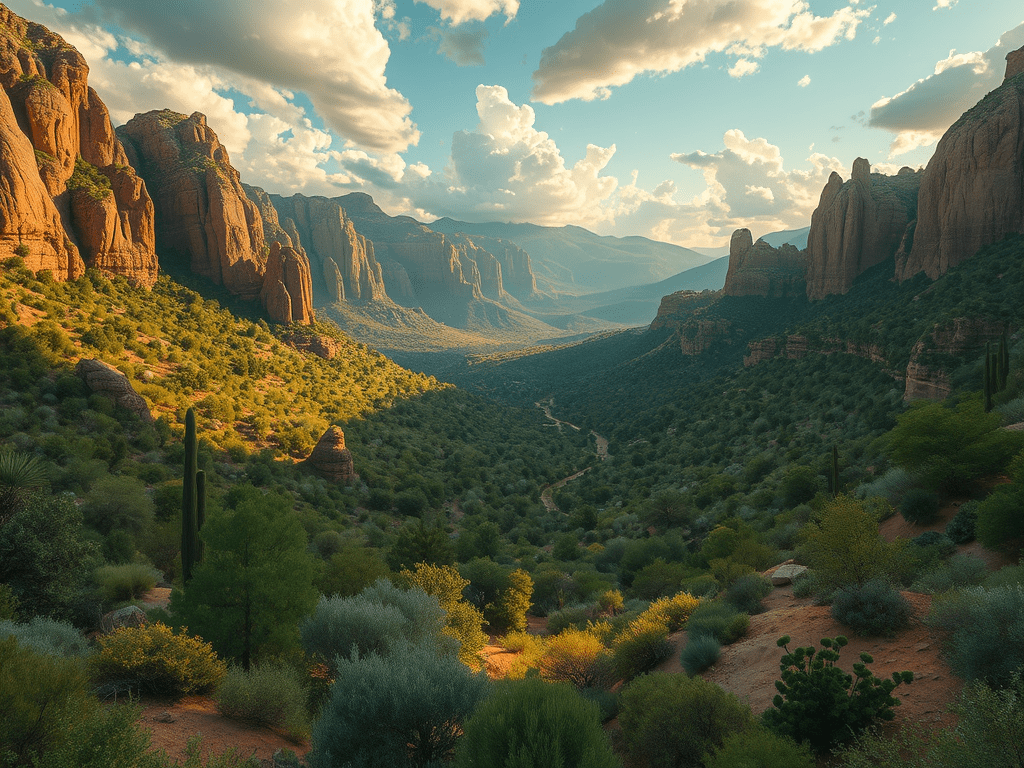
A river winds across this desert valley,
Trees and vineyards follow where it goes.
Lush and green by summer, turning gold by fall,
This is the Verde Valley, so fair and beautiful.
[CHORUS]
Verde Valley, Verde Valley,
An emerald in the desert, where the river goes,
While eagles soar above, this place I know and love,
Clarkale to Camp Verde, where the river flows,
The Verde Valley ever is my home.
[VERSE 2]
Sycamores and sprawling desert willows,
Cloak the winding river with their green and golden tones,
With wildlife and birds, as the season turns,
Round the river valley, my Arizona home.
[CHORUS REPEAT]
Verde Valley, Verde Valley
An emerald in the desert, where the river goes,
While eagles soar above, this place I know and love,
Clarkale to Camp Verde, where the river flows.
The Verde Valley ever is my home.
[VERSE 3]
There’s Cottonwood and Clarkdale and Camp Verde,
and the quirky artsy mountain town Jerome,
Onward north to beautiful Sedona,
Where rocks with crimson hues by sunset glow.
[CHORUS REPEAT]
Verde Valley, Verde Valley
An emerald in the desert, where the river goes,
While eagles soar above, this place I know and love,
Clarkale to Camp Verde, where the river flows.
The Verde Valley ever is my home.
[VERSE 4]
Place of ancient glyphs and Indian ruins,
Early settler history, and mysteries to impart,
Where purple mountains rise into the azure skies,
My home the Verde Valley is forever in my heart…
[CHORUS REPEAT]
Verde Valley, Verde Valley
An emerald in the desert, where the river goes,
While eagles soar above, this place I know and love,
Clarkale to Camp Verde, where the river flows.
The Verde Valley ever is my home.
-

🎵 Sing along with the full lyrics at LyricFind
Always on My Mind
Written by Wayne Carson, Johnny Christopher, and Mark James, 1971“Always on My Mind” began as an apology to a wife who had every reason to be upset. Songwriter Wayne Carson, who had already given the Box Tops their hit “The Letter,” was working at a recording studio in Memphis and had stayed ten days longer than he’d planned. When he phoned home to Springfield, Missouri, to say he’d be later still, his wife was not pleased. Trying to calm her, he told her she had been on his mind the whole time. Carson later said the words hit him as though someone had struck him with a hammer, and he hurried off the phone so he could put them into a song.
He carried a couple of verses around for a while before the song was finished. Late in 1971, in a Memphis studio, he worked it through with Johnny Christopher and Mark James, the writer of Elvis Presley’s “Suspicious Minds.” Looking back, Carson described the whole song as one long apology, and he guessed that a lot of people had been looking for a way to say just that.
The song then waited the better part of ten years to find its home. Brenda Lee was the first to record it and Gwen McCrae the first to release it, both in 1972, and Lee’s version stalled at #45 on the country chart. Elvis Presley recorded it on March 29, 1972, only a few weeks after he and Priscilla separated, and many listeners have heard his own heartache in it ever since. Even so, American disc jockeys mostly played the other side of the single, “Separate Ways,” and the song reached only #16 on the country chart here. In Britain, where it was the featured side, it climbed to #9.
In 1982, Willie Nelson and Merle Haggard were in the studio making their duet album Pancho & Lefty. Johnny Christopher, one of the song’s three writers, was playing guitar on those sessions, and he played “Always on My Mind” for them. Haggard wasn’t interested. Willie was bowled over, and he recorded it on his own. His gentle, plainspoken version went to #1 on the country chart, reached #5 on the pop chart, and was Billboard’s top country single of the year. The three writers won the Grammy for Song of the Year and for Best Country Song, Willie won for his vocal, and the Country Music Association named it Song of the Year two years in a row.
The song has kept on traveling. AllMusic lists more than 300 recorded releases of it. In 1987 the British duo Pet Shop Boys were asked to sing an Elvis favorite on a television special marking ten years since his death. They turned this song into a synth-pop record that became Britain’s Christmas #1 that year, edging out “Fairytale of New York,” and it reached #4 in America the following spring. Still, for many of us, it’s Willie’s quiet voice we hear whenever someone says they were always on our mind.
-

“Too-ra-loo-ra-loo-ral, Too-ra-loo-ra-li,
Too-ra-loo-ra-loo-ral, hush now, don’t you cry!
Too-ra-loo-ra-loo-ral, Too-ra-loo-ra-li,
Too-ra-loo-ra-loo-ral, an Irish lullaby.”Over in Killarney
Many years ago,
Me Mither sang a song to me
In tones so sweet and low.
Twas a simple little ditty,
In her good old Irish way,
And l’d give the world to hear
My mother sing today.“Too-ra-loo-ra-loo-ral, Too-ra-loo-ra-li,
Too-ra-loo-ra-loo-ral, hush now, don’t you cry!
Too-ra-loo-ra-loo-ral, Too-ra-loo-ra-li,
Too-ra-loo-ra-loo-ral, an Irish lullaby.”Oft in dreams I wander
To that cot again,
I feel her arms a-huggin’ me
As when she held me then.
And I hear her voice a -hummin’
As in the days of yore,
When she rocked me fast asleep
Outside the cabin door.“Too-ra-loo-ra-loo-ral, Too-ra-loo-ra-li,
Too-ra-loo-ra-loo-ral, hush now, don’t you cry!
Too-ra-loo-ra-loo-ral, Too-ra-loo-ra-li,
Too-ra-loo-ra-loo-ral, an Irish lullaby.”
This performance is a great example of the
-

Traditional hymn later popularized by the Carter Family.
🎵 Sing along with the full lyrics at LyricFind
(After singing, remember to hit the “back” button to return to Campfire Reunions!) -

Mine eyes have seen the glory of the coming of the Lord:
He is trampling out the vintage where the grapes of wrath are stored;
He hath loosed the fateful lightning of His terrible swift sword:
His truth is marching on.Chorus:
Glory, glory, hallelujah!
Glory, glory, hallelujah!
Glory, glory, hallelujah!
His truth is marching on.I have seen Him in the watch-fires of a hundred circling camps,
They have builded Him an altar in the evening dews and damps;
I can read His righteous sentence by the dim and flaring lamps:
His day is marching on.Chorus
I have read a fiery gospel writ in burnished rows of steel:
“As ye deal with my condemners, so with you my grace shall deal;
Let the Hero, born of woman, crush the serpent with his heel,
Since God is marching on.”Chorus
He has sounded forth the trumpet that shall never call retreat;
He is sifting out the hearts of men before His judgment-seat:
Oh, be swift, my soul, to answer Him! be jubilant, my feet!
Our God is marching on.Chorus
In the beauty of the lilies Christ was born across the sea,
With a glory in His bosom that transfigures you and me:
As He died to make men holy, let us die to make men free,
While God is marching on.Chorus
He is coming like the glory of the morning on the wave,
He is Wisdom to the mighty, He is Succour to the brave,
So the world shall be His footstool, and the soul of Time His slave,
Our God is marching on.Chorus
Rendition by the United States Marines Band:
-

O beautiful for spacious skies,
For amber waves of grain,
For purple mountain majesties
Above the fruited plain!
America! America!
God shed His grace on thee
And crown thy good with brotherhood
From sea to shining sea!O beautiful for pilgrim feet,
Whose stern, impassioned stress
A thoroughfare for freedom beat
Across the wilderness!
America! America!
God mend thine every flaw,
Confirm thy soul in self-control,
Thy liberty in law!O beautiful for heroes proved
In liberating strife,
Who more than self their country loved,
And mercy more than life!
America! America!
May God thy gold refine,
Till all success be nobleness,
And every gain divine!O beautiful for patriot dream
That sees beyond the years
Thine alabaster cities gleam
Undimmed by human tears!
America! America!
God shed His grace on thee
And crown thy good with brotherhood
From sea to shining sea!America the Beautiful
Words by Katharine Lee Bates, 1893; music by Samuel A. Ward, 1882In the summer of 1893, Katharine Lee Bates, a 33-year-old English professor at Wellesley College in Massachusetts, took the long train trip west to teach a summer session in Colorado Springs. Along the way she passed the gleaming white buildings of the World’s Columbian Exposition in Chicago and mile after mile of Midwestern wheat. Near the end of her stay, she rode a prairie wagon all the way to the top of Pikes Peak. Looking out from more than 14,000 feet over that wide, sea-like stretch of country, she felt that all the wonder of America lay spread out below her. Before she left Colorado, she had written a poem.
She called it “Pikes Peak,” but when it first appeared in print, in the July 4, 1895, issue of a Boston church weekly called The Congregationalist, it carried the simpler title “America.” Bates was paid five dollars, and that was the only money she ever received for it. She never took a cent in royalties. The poem caught on quickly, and she kept polishing it. In 1904 she reworked it, adding the lines about crowning thy good with brotherhood from sea to shining sea. She settled on her final version in a 1911 collection of her poems, and those are the words printed above. You can still trace her journey in them: the Chicago fair became the “alabaster cities,” the farm country became the “amber waves of grain,” and the view from the summit became the “purple mountain majesties.”
The music has its own story. Samuel A. Ward was a church organist and choirmaster at Grace Episcopal Church in his hometown of Newark, New Jersey. In 1882, more than ten years before Bates climbed her mountain, a melody came to him while he was riding the ferry back from Coney Island. He wrote it as a setting for an old hymn, “O Mother Dear, Jerusalem,” and named the tune “Materna.”
Bates’s poem was sung to a number of different tunes in its early years, but Ward’s proved the favorite. In 1910, words and music were published together for the first time under the name “America the Beautiful.” Ward never knew. He had died in 1903, and he and Bates never met. Bates lived until 1929, long enough to see her poem become one of the nation’s best-loved songs. When a later contest invited composers to write a new melody for her words, the organizers sifted through more than 900 entries and decided to stay with Ward’s tune. Ward was inducted into the Songwriters Hall of Fame in 1970.
As a hymn and patriotic anthem, it was never a chart record, and it never needed to be. Many artists have recorded it over the years, and one of the most beloved versions came from Ray Charles, whose slow, soulful 1972 arrangement was inducted into the Grammy Hall of Fame in 2005.
Today a statue of Katharine Lee Bates stands outside the Colorado Springs Pioneers Museum, looking toward Pikes Peak.
-

By Irving Berlin
Intro sung by Kate Smith:
“While the storm clouds gather far across the sea,
Let us swear allegiance to a land that’s free,
Let us all be grateful for a land so fair,
As we raise our voices in a solemn prayer. “Everyone:
God bless America, land that I love,
Stand beside her and guide her,
Through the night with the light from above.From the mountains to the prairies,
To the oceans white with foam,
God bless America, my home sweet home.
God bless America, my home sweet home.God bless America, land that I love,
Stand beside her and guide her,
Through the night with the light from above.From the mountains to the prairies,
To the oceans white with foam,
God bless America, my home sweet home.God bless America, my home sweet home.
My preferred guitar key: D
-

Popularized/copyrighted by Jimmie Davis and Charles Mitchell
You are my sunshine
My only sunshine
You make me happy
When skies are gray
You’ll never know, dear
How much I love you
Please don’t take
My sunshine awayThe other night, dear
As I lay sleeping
I dreamed I held you
In my arms
When I awoke, dear
I was mistaken
So I hung my head and criedYou are my sunshine
My only sunshine
You make me happy
When skies are gray
You’ll never know, dear
How much I love you
Please don’t take
My sunshine away
Here are some inspiring performances of You Are My Sunshine, starting with the 1940 version that popularized the song.
And here is more of a home-grown blue grass version:
-

🎵 Sing along with the full lyrics at LyricFind
Peter, Paul and Mary’s 1963 recording turned Dylan’s song into a top-10 hit and carried it to listeners across the country.
Joan Baez sang Dylan’s songs more lovingly than almost anyone. The words in our lyrics link follow her version, so this is the one to sing along with.
Don’t Think Twice, It’s All Right
Written by Bob Dylan, 1962
In the summer of 1962, a 21-year-old Bob Dylan was living in Greenwich Village and missing his girlfriend, Suze Rotolo. She had gone to Italy to study art at the University of Perugia, and she kept putting off her return. Dylan, lonely and heartsick back in New York, turned the feeling into a song. He flipped the story around, though. In “Don’t Think Twice, It’s All Right,” he isn’t the one left behind. He’s the one walking down the road, shrugging off a love that didn’t work out. The two of them didn’t actually part for good until a couple of years later.
The tune has roots older than Dylan. Its opening melody comes from a traditional folk song called “Who’s Gonna Buy Your Chickens When I’m Gone.” Dylan learned it from his friend Paul Clayton, a Greenwich Village folksinger who had already used the same tune for his own song, “Who’s Gonna Buy You Ribbons When I’m Gone?,” recorded in 1960. Dylan borrowed a line or two of Clayton’s words along with the melody. In the folk world, passing tunes along that way was nothing unusual.
Dylan recorded the song on November 14, 1962, accompanying himself on guitar and harmonica, and many listeners consider that take one of his finest. It appeared in 1963 on his album The Freewheelin’ Bob Dylan, whose cover shows Dylan and Suze Rotolo walking arm in arm down a snowy New York street. It also came out as the B-side of his single “Blowin’ in the Wind.”
As a hit, though, the song belongs to Peter, Paul and Mary. The trio shared a manager with Dylan, Albert Grossman, who made a point of offering Dylan’s songs to other artists. Their gentle version reached number 9 on the Billboard Hot 100 in the fall of 1963 and number 2 on the Easy Listening chart. Two years later, the Four Seasons recorded a playful version under the made-up name The Wonder Who?, and it climbed to number 12.
The song stayed tied to Suze Rotolo for years. At the 1964 Newport Folk Festival, Joan Baez introduced it as a song about a relationship that had lasted too long, and Suze was reportedly so upset that she left. Dylan himself has gone on singing it in concert ever since, well over a thousand times. Around a campfire, it’s an easy, rolling tune to strum, with a chorus everyone seems to know.
-

-

🎵 Sing along with the full lyrics at LyricFind
Over the Rainbow
Written by Harold Arlen and E.Y. “Yip” Harburg, 1939
It’s hard to picture The Wizard of Oz without this song, but it very nearly didn’t make it into the film. Composer Harold Arlen and lyricist Yip Harburg wrote it for MGM’s 1939 musical, and Arlen later said the melody came to him while his wife, Anya, was driving them down Sunset Boulevard in Los Angeles. He asked her to pull over near Schwab’s Drugstore so he could jot the tune down before it slipped away.
Harburg wasn’t won over at first. He thought the melody sounded too grand and operatic for a young farm girl from Kansas. Their friend Ira Gershwin suggested Arlen play it a little lighter and brighter, and once he did, Harburg came around. Harburg imagined Dorothy’s world as dry and colorless, so a rainbow would be the most beautiful thing she had ever seen, and he built the song around her longing for a place like that.
After early previews, studio executives cut the song. They felt it slowed the movie down, and some thought it undignified for a star to sing in a barnyard. Associate producer Arthur Freed and others fought to have it put back, and they won. The song went on to win the Academy Award for Best Original Song, and it became Judy Garland’s signature for the rest of her life. She sang it at nearly every concert she gave for three decades.
The song did well on the radio in its own day, too. Glenn Miller and his orchestra took it to the top of the charts in 1939. Generations later, in 2001, the Recording Industry Association of America and the National Endowment for the Arts named it the number one song of the twentieth century. The American Film Institute gave it the same top spot among movie songs in 2004. Many younger listeners know it from Hawaiian singer Israel Kamakawiwoʻole, whose gentle ukulele medley, released in 1993, brought the song to a whole new audience.
-

🎵 Sing along with the full lyrics at LyricFind
Can’t Help Falling in Love
Written by Hugo Peretti, Luigi Creatore, and George David Weiss, 1961This tender ballad has three names on it. Hugo Peretti and Luigi Creatore were cousins who worked together as the songwriting and producing team known as “Hugo & Luigi.” George David Weiss was a lyricist who later co-wrote “What a Wonderful World.” They wrote the song in 1961 for Elvis Presley’s movie Blue Hawaii.
The tune is much older than it sounds. Its melody is borrowed from “Plaisir d’amour,” a French love song composed in 1784 by Jean-Paul-Égide Martini. Martini set his music to a poem from a novel by Jean-Pierre Claris de Florian. So when Elvis sang it, he was singing a melody nearly two hundred years old.
There’s a curious detail hidden in the words. The song was first written from a woman’s point of view, as “Can’t Help Falling in Love with Him.” That explains why the opening lines end on “in” and “sin” rather than on words that rhyme with “you.”
Elvis recorded it at Radio Recorders in Hollywood on March 23, 1961, and it took him 29 takes to get the vocal just right. In the film, his character gives his girlfriend’s grandmother a music box for her birthday. She opens it, and Elvis begins to sing.
RCA released the song as a single on November 21, 1961, with “Rock-A-Hula Baby” on the other side. It climbed to No. 2 on the Billboard Hot 100, kept out of the top spot by Joey Dee and the Starliters’ dance craze hit “Peppermint Twist.” It held No. 1 on Billboard’s easy-listening chart for six weeks and spent four weeks at No. 1 in Britain in 1962. The Blue Hawaii soundtrack album stayed at No. 1 for twenty weeks.
The song stayed close to Elvis for the rest of his life. In his concerts of the late 1960s and 1970s, it became his farewell number, including the close of his 1973 Aloha from Hawaii broadcast. It was also the last song he ever sang on stage, at Market Square Arena in Indianapolis on June 26, 1977.
Many others have recorded it since. Andy Williams took it to No. 3 in Britain in 1970. In 1993, the British reggae band UB40 recorded a breezy, island-flavored version for the movie Sliver. It spent seven weeks at No. 1 in America and also topped the British charts, introducing the old melody to yet another generation.
-

-
🎵 Sing along with the full lyrics at LyricFind
Woody Guthrie wrote America’s alternate national anthem out of pure irritation. In the winter of 1940, hitchhiking to New York, he heard Kate Smith’s “God Bless America” playing seemingly everywhere — and, finding it smug, scrawled his rebuttal in a cheap Times Square hotel. His original title? “God Blessed America for Me,” each verse ending with that sarcastic refrain before he later swapped in “This land was made for you and me.” The tune wasn’t new: Guthrie borrowed it from the Carter Family’s “When the World’s on Fire,” which itself came from an old Baptist hymn. And here’s the part most people never learned in school: Guthrie’s original included pointed verses — one about a “Private Property” sign whose blank back side “was made for you and me,” another about hungry people lined up at the relief office. Those verses were quietly dropped from songbooks and most recordings, and generations of schoolchildren sang a tamer song than the one Woody wrote. The folk revival brought it roaring back — Peter, Paul and Mary made it a staple of their concerts, harmonizing Woody’s plainspoken anthem into something soaring. One last twist worthy of this song about who owns what: in 2016, lawyers challenged the song’s copyright, arguing it belongs to the public domain. The case settled without a clear ruling — so the ownership of “This Land Is Your Land” remains, fittingly, contested ground.
-
🎵 Sing along with the full lyrics at LyricFind
Goodnight Irene
Written by Huddie “Lead Belly” Ledbetter, 1933Few songs have traveled as far as this gentle waltz. It begins in 1886, when Gussie Lord Davis, a young Black songwriter working in Cincinnati, published a parlor song called “Irene, Good Night.” Davis became one of the first Black songwriters to find real financial success. By 1888 he was telling a New York reporter that “Irene” was being sung by minstrel troupes all across the country. Those touring shows carried the song into the South, and from there it slipped into the oral tradition, where singers kept the sweet chorus and changed nearly everything else.
One of the men who picked it up was Huddie Ledbetter, better known as Lead Belly, a twelve-string guitar player from Mooringsport, Louisiana. He said he first heard the refrain and a couple of verses from his Uncle Terrill. His Uncle Bob, recorded years later, sang a nearly identical version and insisted that Huddie had learned it from the family. Relatives had their own tender memory, too. They recalled young Huddie, around 1908, making up the song as a lullaby for his baby niece, whose name was Irene.
Lead Belly’s life was far rougher than his lullaby. He served more than one prison sentence. In Texas, he sang a song of his own composition to Governor Pat Neff, asking for a pardon, and in 1925 the governor granted it. By 1933 he was behind bars again, this time at the Louisiana State Penitentiary at Angola. That summer, the folklorist John Lomax and his son Alan arrived to record songs for the Library of Congress, and everyone told them Lead Belly was the man to meet. Among the songs he sang for them was “Irene.” He was released in 1934. Lead Belly’s singing was widely credited for his freedom, though a prison official later wrote to Lomax denying that it had anything to do with it.
Over the next few years, Lead Belly kept adding to the song. His first recording had just two verses, and by the time the Lomaxes printed it in a 1936 songbook, it had grown to six, with spoken passages in between. Some of those verses were dark. One spoke of taking morphine, and another described a “great notion” to jump in the river. That line later gave the novelist Ken Kesey the title for his 1964 book, Sometimes a Great Notion. In 1941, Woody Guthrie borrowed the melody for “Roll On, Columbia, Roll On.”
Lead Belly spent his later years in New York, where his home became a gathering place for young folk musicians. One of them was Pete Seeger, who had first heard Lead Belly sing as a teenager and called “Irene” his theme song. Lead Belly often opened and closed his radio programs with it. When he died in December 1949, he was living on welfare, and the fame he had worked so long for had never quite arrived. Just months later, in May 1950, Seeger and his new group, The Weavers (Lee Hays, Fred Hellerman, and Ronnie Gilbert), recorded their late friend’s song for Decca Records, with lush strings arranged by Gordon Jenkins. The Weavers left out the darkest verses, and Time magazine grumbled that the result was a “prettied up” version. But the public loved it. “Goodnight Irene” was only the B-side of their single, yet it reached No. 1 and stayed there for 13 weeks. It sold about two million copies and was named Billboard’s top song of 1950. The Weavers’ gentler words are the ones most of us sing today.
Everyone wanted a turn that year. Frank Sinatra’s version reached No. 5 on the pop chart, and Red Foley and Ernest Tubb took it to No. 1 on the country chart. Across the ocean, fans of the English football club Bristol Rovers adopted the song in 1950 and still sing it as their club anthem. The fame came at a strange moment for The Weavers, though. That same year the Red Scare caught up with them, and before long they were blacklisted and barred from radio and television. Lead Belly’s own recording has fared better with time. In 2002 the version he made for the Library of Congress at Angola was honored with a Grammy Hall of Fame Award, and the following year it was added to the National Recording Registry. Royalties have reached into the millions, shared between the estates of Lead Belly and John Lomax.
Not bad for a song a prisoner sang for a visiting folklorist, which may have begun as a lullaby for a baby girl.
-
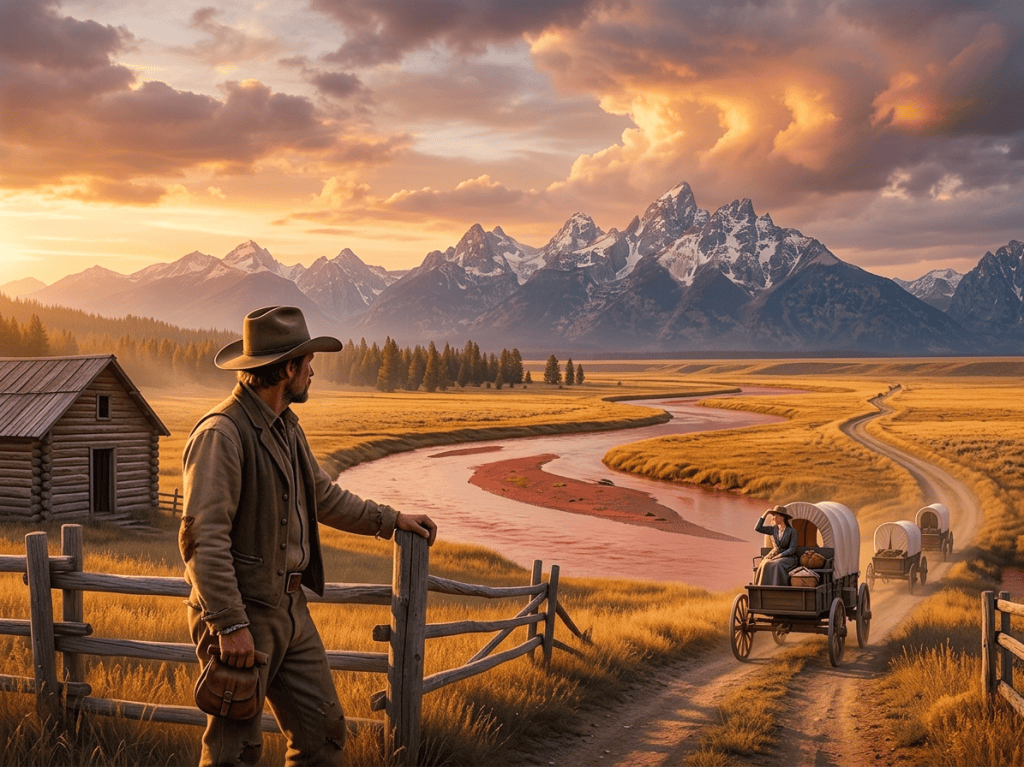
These traditional lyrics are in the public domain, lightly adapted for singalongs.
From this valley they say you are going,
We will miss your bright eyes and sweet smile,
For they say you are taking the sunshine
That brightens our pathway awhile.Come and sit by my side if you love me,
Do not hasten to bid me adieu,
But remember the Red River Valley
And the one who has loved you so true.For a long time I have been waiting
For those dear words you never would say,
But at last all my fond hopes have vanished,
For they say you are going away.Won’t you think of the valley you’re leaving?
Oh how lonely, how sad it will be.
Oh think of the fond heart you’re breaking,
And the grief you are causing to me.Come and sit by my side if you love me,
Do not hasten to bid me adieu,
But remember the Red River Valley
And the one who has loved you so true.As you go to your home by the ocean,
May you never forget those sweet hours
That we spent in the Red River Valley
And the love we exchanged ‘mid the flowers.Come and sit by my side if you love me,
Do not hasten to bid me adieu,
But remember the Red River Valley
And the one who has loved you so true.Red River Valley
Traditional, first published by James J. Kerrigan, 1896Few songs feel as much like home around a campfire as “Red River Valley.” Even so, nobody knows for certain who wrote it, or even which Red River it is singing about. Over the years it has traveled under a whole string of names, among them “Cowboy Love Song,” “Bright Sherman Valley,” and “In the Bright Mohawk Valley,” depending on where folks happened to be singing it.
The earliest firmly dated version appeared in 1896. That year, sheet music titled “In the Bright Mohawk Valley” was printed in New York, with a man named James J. Kerrigan listed as the writer. But the song seems to be older than his sheet music. The earliest known handwritten copy of the words carries the notes “Nemaha 1879” and “Harlan 1885,” which may point to places in Nebraska or Iowa.
Then the story turns north. Canadian folklorist Edith Fowke gathered evidence that the song was known in at least five Canadian provinces before 1896. She suspected it was born around 1870, when soldiers of the Wolseley Expedition went to Manitoba’s Red River Valley. In her telling, it began as the lament of a young Métis woman whose soldier sweetheart was leaving with the rest of his company. Part of her case rested on a single word, “adieu,” hardly the farewell you’d expect from a cowboy on the southwestern plains. Many years later, folk song scholar John Garst confirmed much of her work, showing that both the tune and the words were around before Kerrigan’s version. Still, the question has never been fully settled, and many people picture the Red River of Texas when they sing it.
That cowboy reputation grew through early records and movies. Texas singing cowboy Carl T. Sprague recorded it as “Cowboy Love Song” in 1925. In 1927, Hugh Cross and Riley Puckett made the first commercial recording under the title “Red River Valley,” and Carl Sandburg included it in his American Songbag that same year. It was another Texan, Jules Verne Allen, whose 1929 recording made the song most popular, though curiously, Allen himself believed it came from Pennsylvania. In 1936, Gene Autry sang it in a film named for the song, and it has been a Western standard ever since. Woody Guthrie even borrowed the melody for “Jarama Valley,” a song about the Spanish Civil War.
The recording on this page comes from Suzy Bogguss. She sings a few words differently from the traditional lyrics printed above, as folk singers have always done. In 2008, while singing on stage with Garrison Keillor, she noticed that everyone joined in on “Red River Valley” except the children, who didn’t seem to know it. That moment led to her 2011 album American Folk Songbook, along with a songbook she modeled on the one she had used in fifth grade, so a new generation could learn these old favorites and sing along too.
-

-

🎵 Sing along with the full lyrics at LyricFind
Jamaica Farewell
Written by Irving Burgie, 1956For many of us, a single verse of “Jamaica Farewell” is enough to bring back a warm breeze and a sailor’s sad goodbye in Kingston Town. The song came to the world through Harry Belafonte. The man who shaped it, though, grew up a long way from the islands, in Brooklyn.
Irving Burgie was born there in 1924. His father came from Virginia, and his mother was a seamstress from Barbados. He grew up poor during the Great Depression and served in an all-Black Army unit in World War II. When he came home, the GI Bill paid for him to study voice at the Juilliard School. His first love was classical singing: German art songs and Italian and French opera arias. In time he picked up a guitar, took the stage name “Lord Burgess,” and played folk clubs between New York and Chicago. He made his New York nightclub debut at the Village Vanguard in 1954.
A mutual friend, the writer William Attaway, persuaded Harry Belafonte to listen to some of Burgie’s songs. That meeting led to Belafonte’s 1956 album Calypso. Burgie was credited on eight of its eleven songs, including “Jamaica Farewell” and “Day-O.” Calypso held the top spot on Billboard’s album chart for 31 weeks, and it is often called the first album to sell a million copies.
There is a little mystery in the song’s roots. Burgie called himself a folklorist, and he said much of his work grew out of songs and ditties he had heard in the Caribbean. He openly admitted that he borrowed the melody of an older Jamaican folk song called “Iron Bar.” Belafonte himself said the song had been sung in the West Indies long before Burgie came along. In his memoir he fondly called it a Lord Burgess “retread” of that old island tune. It was one of the first songs the two men worked up for the album, and Belafonte said it became one of his best-known and most-loved songs.
“Jamaica Farewell” was the first single from Calypso, released in September 1956. It climbed to No. 14 on Billboard’s pop chart. “Day-O” followed it into the charts and became an even bigger hit. In Australia, “Jamaica Farewell” rose all the way to No. 2 in 1957. Over the years it has been recorded by Sam Cooke, Chuck Berry, Carly Simon, and Jimmy Buffett, among many others. Burgie later said that by his early thirties, the songs he wrote for Belafonte had made him a wealthy man.
Burgie’s most lasting gift may have been to his mother’s homeland. In 1966 he wrote the words to the national anthem of Barbados, and the island has honored him as a hero ever since. He died on November 29, 2019, at the age of 95. The next day was Barbados’ Independence Day. At the parade, the prime minister announced his passing and asked the crowd for a moment of silence in his honor.
-