
Campfire Reunions

Your Singalong Favorites with the Stories Behind the Songs

  • Love Is Blue

    🎵 Sing along with the full lyrics at LyricFind

    Love Is Blue
    Written by André Popp and Pierre Cour, 1967; English lyrics by Bryan Blackburn

    “Love Is Blue” began life in France as “L’amour est bleu,” with music by composer André Popp and French words by lyricist Pierre Cour. The two were already a proven team: in 1960 they had written “Tom Pillibi,” which won the Eurovision Song Contest for France. The French lyric paints love in colors and weather. Love is sweet and blue as the sky while the beloved is near, then turns gray, with rain falling and the wind crying, once they go away. When Bryan Blackburn later wrote the English words, he kept only the colors, using blue, gray, red, green, and black to trace the story of a love that has slipped away. That gives us the familiar opening, “Blue, blue, my world is blue.”

    The song made its debut on April 8, 1967, at the Eurovision Song Contest in Vienna, broadcast live across Europe. Luxembourg chose it as its entry and gave it to a 17-year-old Greek-born singer billed simply as Vicky. Today we know her as Vicky Leandros. She sang it second that evening and finished a respectable fourth out of seventeen. The winner was Sandie Shaw’s “Puppet on a String.” Vicky recorded the song in several languages, including English, and it became a modest hit in parts of Europe, Japan, and Canada. She went on to win Eurovision for Luxembourg five years later with a different song. In 2026 she returned to the contest to sing “L’amour est bleu” once more, as part of the celebrations for Eurovision’s 70th contest.

    The song’s real fame came from an unlikely source. French orchestra leader Paul Mauriat recorded a lush instrumental version in late 1967 for an album of the past year’s hits. By his own account, he wasn’t especially fond of the tune. He picked it because his record label, Philips, published it. Then a disc jockey in Minneapolis played the record and asked his listeners what they thought. The phones lit up, and interest spread across the country.

    What those callers were hearing was a sound unlike most orchestral records of the day. Mauriat’s arrangement is built around the bright, crisp notes of a harpsichord, an instrument most of us link with music from centuries past. In the mid-1960s, though, it had become a fashionable sound in pop music. The Left Banke built “Walk Away Renée” around one in 1966, the Beatles used one on “Fixing a Hole,” and the Doors gave one a starring role in “Love Me Two Times.” The Beatles’ “In My Life” even has a solo that sounds like a harpsichord but is really a piano recorded at half speed and then sped up. Mauriat’s twist was to set the harpsichord against sweeping strings, with guitar and drums keeping a steady pop beat underneath. Easy-listening orchestras usually stayed soft and smooth, so his record had a fresh, modern sparkle that appealed to young listeners and their parents alike. The sound proved lasting. Rock guitarist Jeff Beck recorded his own version modeled on Mauriat’s in 1968, and more than thirty years later an English electronic duo, J Walk, borrowed the harpsichord riff for a 2002 track.

    In February 1968, Mauriat’s “Love Is Blue” reached number one on the Billboard Hot 100 and stayed there for five weeks. It was the first record by a French artist to top that chart. No other French song managed it again until 2017. The record also spent eleven weeks at the top of Billboard’s Easy Listening chart, a record run on that chart for the next 25 years, and Billboard ranked it the number two song of 1968. In a curious twist, it sold fewer than 30,000 copies back home in France but about two million singles in the United States.

    So many singers wanted a piece of the song that several versions climbed the charts at once. Among the vocal recordings, Al Martino’s was the most popular, reaching number 3 on Billboard’s Easy Listening chart and number 57 on the Hot 100. He made it the title song of a 1968 album. His warm, full voice suited the bittersweet English lyric, and his version is the one many of us still hear in our heads when we sing the words. Martino would find a whole new audience a few years later, playing the singer Johnny Fontane in The Godfather. Claudine Longet’s French-language version also charted that year, and the soul group The Dells later had a hit pairing it with “I Can Sing a Rainbow.” For a song that didn’t win its contest, “Love Is Blue” has had a remarkably long and happy life. It remains one of the very few non-winning Eurovision entries ever to become a worldwide hit.


  • Morning Has Broken

    🎵 Sing along with the full lyrics at LyricFind

    Morning Has Broken
    Words by Eleanor Farjeon, 1931; music traditional Scottish Gaelic melody

    Long before it was a pop hit, “Morning Has Broken” was a simple hymn of thanks for each new day. It started with a request. In the early 1930s, Percy Dearmer was preparing an enlarged edition of the English hymnbook Songs of Praise. He had a lovely old Gaelic tune he wanted to use, but no words that fit its unusual lilting rhythm. He also felt the book needed a song of gratitude for the gift of an ordinary morning. So he turned to Eleanor Farjeon.

    Farjeon was born in London in 1881 and was one of England’s best-loved children’s writers, with stories, plays, and poems to her name. She later won the Carnegie Medal and the Hans Christian Andersen Award. Her verses were inspired by the village of Alfriston in East Sussex, and they captured the freshness of dawn: birdsong, new rain, and sunlight on a wet garden. The hymn first appeared in Songs of Praise in 1931.

    The tune is called “Bunessan,” after a small village on the Isle of Mull in Scotland. It had been sung in the Highlands long before anyone wrote it down. Before Farjeon’s words came along, the melody carried a Gaelic Christmas carol by Mary MacDonald, known in English as “Child in the Manger.” For years, Scottish children sang it at Christmas, while English schoolchildren sang Farjeon’s morning song to the very same notes.

    For four decades it lived quietly in hymnbooks. Then, in 1971, a young singer-songwriter named Cat Stevens hit a dry spell while working on his album Teaser and the Firecat. Browsing for ideas, he came across a hymnbook, found this song, and thought it was good. He added his own guitar chords. There was one problem: sung straight through, the hymn lasted less than a minute.

    The answer came from a young session pianist named Rick Wakeman, who would soon join the rock band Yes. Wakeman wrote and played the piano introduction and interludes that stretch the song out and give it its sparkle. Many listeners would say that piano is half the magic of the record. Wakeman wasn’t credited on the album, though, and for years he told audiences, with a comedian’s timing, that he was never paid for the session either. When Stevens later tried to settle the debt, Wakeman reportedly turned him down. He joked that he’d made far more money telling the story on stage than the fee would ever have been.

    Released as a single in 1972, “Morning Has Broken” reached No. 6 on the Billboard Hot 100 and No. 9 in Britain. Teaser and the Firecat climbed to No. 2 on the American album chart. Thanks to that recording, a hymn that few Americans knew found its way into most hymnals printed since. Today it is sung at weddings, at memorial services, and around campfires, and many people think of it as a Cat Stevens song. Stevens himself later took the name Yusuf Islam, and he still performs it.

  • Carolina in My Mind

    🎵 Sing along with the full lyrics at LyricFind

    Carolina in My Mind
    Written by James Taylor, 1968

    Few songs capture homesickness as gently as this one, and it’s fitting that James Taylor wrote it about as far from North Carolina as he had ever been. In 1968 he was a young, largely unknown singer who had come to London hoping to make a record. Through his friend Danny Kortchmar, he met producer Peter Asher, who had just joined the Beatles’ brand-new label, Apple Records. James Taylor became Apple’s first signing from outside Britain, and he began writing this song in Asher’s flat on Marylebone High Street.

    He didn’t finish it there. Taylor took a holiday to the Mediterranean island of Formentera, kept working on the song, and completed it while stranded on nearby Ibiza with Karin, a Swedish girl he had just met. She is the Karin in the lyrics. Years later in concert, he would tell audiences that he had known her only briefly and never saw her again, and he joked about ways he might track her down. But his heart was really back home: he was missing his family, his dog, and the red soil and quiet hills around Chapel Hill, where he had grown up and where his father taught at the University of North Carolina.

    The recording sessions had a remarkable cast. Taylor recorded at Trident Studios in London, where the Beatles were working on their White Album at the same time. Paul McCartney played bass on the track, and George Harrison quietly added backing vocals without credit. When Taylor sings about a “holy host of others standing around” him, he means the Beatles themselves. Yet the very next line admits he was still “on the dark side of the moon.” Behind the scenes, Taylor had fallen back into drug addiction during those London months, and the song’s longing for home carries some of that ache.

    That struggle also hurt the song’s chances. The album came out in December 1968, and the single followed early in 1969, but Taylor was hospitalized and couldn’t promote it. The single failed to chart in Britain and stalled at No. 118 in the United States. After Sweet Baby James and “Fire and Rain” made him a star, Apple reissued the single in 1970, and this time it climbed to No. 67. Other singers noticed the song before the public did. North Carolina’s own George Hamilton IV took it into the country Top 30 in 1969, and Melanie and John Denver both recorded it in 1970.

    The version most of us know came later. Because of licensing trouble with Apple, Taylor re-recorded the song in Los Angeles in 1976 for his Greatest Hits album. This time he sang it at a slower, more wistful pace, with fiddle and pedal steel guitar. That album went on to sell more than 11 million copies in the United States, carrying the song into homes everywhere.

    It was never a big hit, but it has outlasted many songs that were. It is often called North Carolina’s unofficial state anthem, and graduating students at the University of North Carolina at Chapel Hill sing it at every commencement. Taylor has performed it on nearly every tour of his career. He once said that audiences respond so warmly to it that he plays it almost every time he performs and has never grown tired of it.

  • O Come, All Ye Faithful

    O come, all ye faithful, joyful and triumphant,
    O come ye, O come ye to Bethlehem;
    Come and behold him, born the King of angels;
    O come, let us adore him, O come, let us adore him,
    O come, let us adore him, Christ the Lord.

    God of God, Light of Light,
    Lo, he abhors not the Virgin’s womb;
    Very God, begotten, not created;
    O come, let us adore him, O come, let us adore him,
    O come, let us adore him, Christ the Lord.

    Sing, choirs of angels, sing in exultation,
    Sing, all ye citizens of heaven above!
    Glory to God, glory in the highest;
    O come, let us adore him, O come, let us adore him,
    O come, let us adore him, Christ the Lord.

    Yea, Lord, we greet thee, born this happy morning;
    Jesus, to thee be glory given;
    Word of the Father, now in flesh appearing;
    O come, let us adore him, O come, let us adore him,
    O come, let us adore him, Christ the Lord.

    O Come, All Ye Faithful

    Written by John Francis Wade, c. 1743; English translation by Frederick Oakeley, 1841

    This beloved Christmas carol began life in Latin as “Adeste Fideles,” and for a long time nobody was quite sure who wrote it. Over the years it was credited to all sorts of people, including a king of Portugal. That mix-up came about because Londoners in the late 1700s heard it sung at the chapel of the Portuguese embassy and began calling it “the Portuguese Hymn.” The name stuck long after the trail had gone cold.

    The mystery was largely settled in the 1940s, when a Benedictine monk named Dom John Stéphan studied the earliest surviving manuscripts. All of them led back to one man, John Francis Wade. Wade was an English Catholic who lived in the community of English exiles at Douai, in northern France. He earned his living copying music by hand, beautiful plainchant for chapels and private families, and “Adeste Fideles” turned up again and again in his copies. Most scholars now credit him with both the words and the melody.

    Here is where the story gets intriguing. Wade lived at a time when many English Catholics in exile hoped to see Bonnie Prince Charlie restored to the British throne, and his manuscripts are sometimes decorated with symbols tied to that cause. Some music historians have suggested the hymn had a hidden second meaning. In their view, the Latin line about the King of Angels, “Regem Angelorum,” echoes “Regem Anglorum,” meaning King of the English, so a carol about Bethlehem may have doubled as a quiet rallying song for the prince. It remains a theory, but it is a lovely bit of intrigue tucked inside such a gentle tune.

    The English words most of us sing came about a century later. In 1841, Frederick Oakeley, a priest serving a London congregation, translated the hymn so his people could sing it in their own language. His version, beginning “O come, all ye faithful, joyful and triumphant,” was published in 1852 and spread from there into hymnals across the English-speaking world.

    A carol this old was never meant for the record charts, and it has never needed them. Its popularity is measured in centuries of candlelight services, school pageants, and family gatherings. Its sweeping, welcoming opening still invites everyone in the room to come and join the song.

  • Hark the Herald Angels Sing

    Hark! the herald angels sing,
    “Glory to the newborn King;
    Peace on earth, and mercy mild,
    God and sinners reconciled!”
    Joyful, all ye nations, rise,
    Join the triumph of the skies;
    With th’angelic host proclaim,
    “Christ is born in Bethlehem!”
    Hark! the herald angels sing,
    “Glory to the newborn King!”

    Christ, by highest heav’n adored;
    Christ, the everlasting Lord;
    Late in time behold Him come,
    Offspring of a virgin’s womb.
    Veiled in flesh the Godhead see;
    Hail th’incarnate Deity,
    Pleased as man with man to dwell,
    Jesus, our Emmanuel.
    Hark! the herald angels sing,
    “Glory to the newborn King!”

    Hail the heav’n-born Prince of Peace!
    Hail the Sun of Righteousness!
    Light and life to all He brings,
    Ris’n with healing in His wings.
    Mild He lays His glory by,
    Born that man no more may die,
    Born to raise the sons of earth,
    Born to give them second birth.
    Hark! the herald angels sing,
    “Glory to the newborn King!”

    Hark the Herald Angels Sing
    Words by Charles Wesley, 1739; music by Felix Mendelssohn, 1840

    This carol comes to us through the hands of several people, none of whom set out to create the carol we know today. The words began with Charles Wesley, the English clergyman and poet who, with his brother John, helped found the Methodist movement. Charles wrote more than six thousand hymns in his lifetime. In 1739 he published a “Hymn for Christmas-Day” in a collection he and John put together. It was a slow, solemn piece of ten short verses, and it began with a line that might puzzle us today: “Hark, how all the welkin rings.” “Welkin” is an old word for the sky or the heavens.

    In 1753 the preacher George Whitefield, a friend and fellow traveler of the Wesleys, included the hymn in his own collection. Along the way he changed that opening to the words we sing now, “Hark! the herald angels sing.” The Wesleys were particular about their work. John Wesley later wrote in the preface to one of their hymnbooks that he wished people would stop trying to “mend” their hymns, because they really weren’t able to. Others kept trimming and rearranging the verses anyway over the following decades, until the text settled into something close to our familiar version.

    The music has an even more unexpected history. In 1840 the German composer Felix Mendelssohn wrote a festive cantata for men’s chorus and brass. It was part of a celebration in Leipzig marking four hundred years since Johannes Gutenberg’s printing press. One of its rousing choruses honored Gutenberg himself. Mendelssohn was pleased with the tune but felt strongly about where it belonged. He wrote to his English publisher that singers and listeners would like it very much, but that it would never do for sacred words.

    Mendelssohn died in 1847, so he never learned how wrong that prediction would turn out to be. In 1855 William Hayman Cummings, a young English organist and singer, noticed that Wesley’s words fit Mendelssohn’s melody. He paired the two for a performance at Waltham Abbey near London. The combination caught on quickly. Within a few years it was appearing in hymnals across England, and it has been a centerpiece of Christmas services, carol concerts, and caroling around the world ever since.

    As a hymn from long before recorded music, it never appeared on any popular music charts. Its staying power shows in another way. It has been recorded by countless choirs and singers and is sung by large and small gatherings every December. Today it’s hard to picture a Christmas season without it.

  • The Christmas Song (Chestnuts Roasting on an Open Fire)

    🎵 Sing along with the full lyrics at LyricFind

    The Christmas Song (Chestnuts Roasting on an Open Fire)
    Written by Mel Tormé and Robert Wells, 1945

    It’s hard to think of a cozier song than this one, with its crackling fire and frosty noses. Yet it was born on a sweltering afternoon in July 1945, in the middle of a Los Angeles heat wave. Nineteen-year-old Mel Tormé drove over to the Toluca Lake home of his songwriting partner, twenty-two-year-old Bob Wells, and let himself in. Bob was nowhere in sight, but on the piano sat a spiral notepad with four lines written in pencil: chestnuts roasting, Jack Frost nipping, carols sung by a choir, and folks dressed up like Eskimos.

    When Bob finally appeared, he explained that he’d tried everything to cool off that day, including cold drinks and a cold shower. Then he’d wondered whether writing a few wintry lines might cool him down, at least in his mind. Mel looked at the pad and thought it might make a song. The two sat down together, and by Tormé’s own account the whole thing was finished in about forty-five minutes. Tormé wrote all the music and some of the words. Both young men were Jewish, which adds a gentle twist to the story of one of America’s best-loved Christmas songs.

    Delighted with their afternoon’s work, they headed into Hollywood to play it for anyone who would listen. Johnny Burke at their publishing company wasn’t impressed. He felt a Christmas song would only be good for one day of the year. Their friend Nat King Cole felt differently. He fell in love with the song on the spot. In June 1946 he recorded it with his trio. Then, over the objections of his label, Capitol Records, he insisted on recording it again that August with a small string section and a harp. That version came out in November 1946 and became a big hit on both the pop and R&B charts. His earliest take has one little slip: Cole wonders whether “reindeers” really know how to fly, and the songwriters pointed out the grammar.

    Cole kept coming back to the song. He recorded it again in 1953 with an orchestra conducted by Nelson Riddle, and once more in 1961, this time in stereo with a full orchestra. That 1961 recording is the one most of us hear on the radio every December, and it has had a remarkably long life. It reached number 65 on the Billboard Hot 100 in 1962 and climbed to number 11 in 2018. In January 2023 it finally entered the top ten for the first time, more than sixty-two years after it first appeared on the chart, which set a record. Cole’s original 1946 recording was inducted into the Grammy Hall of Fame in 1974, and in 2022 the Library of Congress chose the 1961 version for preservation in the National Recording Registry.

    Both writers went on to long careers. Tormé became a beloved jazz singer known as “The Velvet Fog.” He recorded the song himself many times, and in 1963 he wrote a new opening verse for it while working on Judy Garland’s television show. Wells went on to write for film and television, winning six Emmys and co-writing the theme song for The Patty Duke Show. Their summertime daydream has become one of the most-performed Christmas songs of all time, offered, as its last verse says, to kids “from one to ninety-two.”

  • Joy to the World

    Joy to the world! The Lord is come
    Let earth receive her King
    Let every heart prepare Him room
    And heaven and nature sing
    And heaven and nature sing
    And heaven, and heaven, and nature sing

    Joy to the Earth! The Saviour reigns
    Let men their songs employ
    While fields and floods, rocks, hills, and plains
    Repeat the sounding joy
    Repeat the sounding joy
    Repeat, repeat the sounding joy

    No more let sins and sorrows grow
    Nor thorns infest the ground
    He comes to make His blessings flow
    Far as the curse is found
    Far as the curse is found
    Far as, far as, the curse is found

    He rules the world with truth and grace
    And makes the nations prove
    The glories of His righteousness
    And wonders of His love
    And wonders of His love
    And wonders, wonders, of His love!

    Joy to the World
    Words by Isaac Watts, 1719; music by Lowell Mason, 1839

    It may surprise you to learn that one of the best-loved Christmas carols in the English language was never written as a Christmas song at all. Its words come from Isaac Watts, an English minister and poet born in Southampton in 1674. Watts wrote some 750 hymns over his lifetime, including “O God, Our Help in Ages Past” and “When I Survey the Wondrous Cross,” and he is often remembered as the father of English hymnody.

    In 1719 Watts published a collection called The Psalms of David Imitated in the Language of the New Testament. In those days, many English congregations sang only close, word-for-word versions of the Psalms. Watts thought they could do better and retell the old psalms in fresh verse. “Joy to the World” was his take on the second half of Psalm 98, where the seas, rivers, and hills are all called to rejoice. That’s where his lovely picture of heaven and nature singing comes from. Watts meant it as a celebration of a joyful future, not as a story of the manger. There are no shepherds, angels, or Bethlehem anywhere in it. Only over time did singers come to hear it as a Christmas hymn, and that’s where it has stayed.

    For more than a century the words had no settled tune. That changed in America, thanks to Lowell Mason, a Boston music teacher and church musician who did more than almost anyone to bring music into American schools and churches. In 1839 Mason published the tune we know today, which he called “Antioch,” and marked it “from Handel.” Listeners have long noticed that its opening phrases sound a little like bits of Handel’s Messiah. But no Handel original has ever been found, and earlier versions of the tune had already appeared in English hymn books a few years before. Most music historians now think Mason shaped the melody himself from those sources and borrowed Handel’s famous name to lend it some polish.

    Whatever its roots, the pairing stuck. By the late twentieth century, “Joy to the World” had become the most-published Christmas hymn in North America. Its fame doesn’t rest on any one hit recording, either. It has simply been sung in churches, schools, living rooms, and around pianos for generations. One fun footnote: if someone in your group grins and mentions a bullfrog, they’re thinking of a completely different “Joy to the World.” That one was written by Hoyt Axton and became a number one hit for Three Dog Night in 1971.

  • Mary Did You Know?

    🎵 Sing along with the full lyrics at LyricFind

    Mary, Did You Know?
    Words by Mark Lowry, 1984; music by Buddy Greene, 1991

    This modern Christmas favorite began with a simple assignment. In 1984, singer and comedian Mark Lowry was asked to write the script for a Christmas program at his church in Lynchburg, Virginia. As he worked, he found himself thinking about the questions he’d love to ask Mary if he could sit down with her. What was it like to raise that child? What did she know, and what didn’t she? Those questions became a series of short monologues for the program, and later the lyric of the song. The song asks its questions but never answers them.

    The words waited seven years for their music. In 1991, Lowry and Buddy Greene, a respected songwriter and harmonica player, were both touring with the gospel singers Bill and Gloria Gaither. Lowry gave Greene the lyric, and Greene took it home. Before writing the tune, Greene spent a day listening to Christmas carols in minor keys, such as “What Child Is This?” and “We Three Kings.” You can hear that influence in the song’s quiet, searching melody.

    The first recording came that same year. Michael English, Lowry’s fellow member of the Gaither Vocal Band, included it on his 1991 debut solo album, and it reached No. 6 on Contemporary Christian Music magazine’s Adult Contemporary chart. Country singer Kathy Mattea recorded it for her 1993 Christmas album, Good News, which gave the song its first broad exposure on country radio. Kenny Rogers and Wynonna Judd released a duet version that reached No. 55 on the country chart in 1997. Since then, it has been recorded by a long list of artists, including Clay Aiken, CeeLo Green, Dolly Parton, and Carrie Underwood.

    The version many people know best came from Pentatonix, the five-voice a cappella group. They recorded it for their 2014 album That’s Christmas to Me. With no instruments at all, only voices, their recording entered the Billboard Hot 100 at No. 26 in December 2014. That was the highest new entry on the chart that week and brought the song to a large new pop audience.

    Not everyone has admired the song. Over the years, some commentators have picked apart its questions and published essays arguing about them. Lowry takes the criticism in good humor. He closes every concert with the song, whatever the season. “When you have one hit,” he once said, “you better end with it.”

  • Silent Night

    Silent night, holy night,
    All is calm, all is bright
    Round yon Virgin, Mother and Child.
    Holy infant so tender and mild,
    Sleep in heavenly peace,
    Sleep in heavenly peace.

    Silent night, holy night,
    Shepherds quake at the sight.
    Glories stream from heaven afar,
    Heavenly hosts sing Alleluia!
    Christ the Savior is born,
    Christ the Savior is born!

    Silent night, holy night,
    Son of God, love’s pure light.
    Radiant beams from Thy holy face,
    With the dawn of redeeming grace,
    Jesus, Lord, at Thy birth,
    Jesus, Lord, at Thy birth.

    About Silent Night
    Words by Joseph Mohr, 1816; music by Franz Xaver Gruber, 1818; English translation by John Freeman Young, 1859

    “Silent Night” began as a German poem, “Stille Nacht,” written in 1816 by Joseph Mohr, a young assistant priest in Austria. Two years later, serving at the little church of St. Nicholas in Oberndorf, near Salzburg, he asked his friend Franz Xaver Gruber, a schoolteacher and organist, to set it to music. On Christmas Eve, 1818, the two men sang it together for the first time, with Mohr accompanying on guitar.

    A traveling organ repairman carried the song into the mountains of the Zillertal, where touring family singers picked it up and took it across Europe and eventually to America. Along the way the writers’ names were lost, and many people assumed a famous composer like Mozart or Haydn had written it. Gruber finally set the record straight in 1854. The English words most Americans sing come from John Freeman Young, an Episcopal priest in New York, whose translation was published in 1859.

    The carol has since been translated into more than 300 languages. Soldiers on both sides sang it during the Christmas truce of 1914, and Bing Crosby’s 1935 recording became one of the best-selling singles of all time.

    “Silent Night” is in the public domain, so the words, melody, and English translation are free for anyone to sing and share. Modern arrangements and recordings may still carry their own copyrights.

  • Early Morning Rain

    🎵 Sing along with the full lyrics at LyricFind

    Early Morning Rain

    Written by Gordon Lightfoot, 1964

    Long before Gordon Lightfoot became one of Canada’s best-loved voices, he was a young man a long way from home. Around 1960 he was living in Los Angeles, studying music at Westlake College of Music, and he sometimes grew terribly homesick for Ontario. On rainy days he would drive out to Los Angeles International Airport, find a spot where he could watch the planes come in, and simply look at them for a while. The sight of those airliners climbing up into the gray, overcast sky stayed with him.

    Several years later, back in Canada, the memory finally found its way into a song. It was 1964, and Lightfoot was at home looking after his five-month-old son. He later remembered thinking, “I’ll put him over here in his crib, and I’ll write myself a tune.” The tune turned out to be “Early Morning Rain.”

    The song tells of a man down on his luck, standing by an airport fence with almost nothing in his pockets, watching a big Boeing 707 roar off toward home without him. Listeners have often heard it as an old hobo’s story brought into the jet age. A drifter in earlier times might have caught a ride on a passing freight car, but a jetliner offers no such chance, and so the man is left behind in the rain.

    Lightfoot recorded his own version in December 1964, but his record company held onto it, and his debut album, Lightfoot!, didn’t come out until January 1966. By then other singers had already carried the song far and wide. The Canadian folk duo Ian & Sylvia recorded it first, and in 1965 Peter, Paul and Mary released their version, which reached No. 91 on the Billboard Hot 100 and No. 39 in Canada. In 1966 George Hamilton IV took it to No. 9 on the American country chart.

    The song kept traveling for decades. Bob Dylan included it on his 1970 album Self Portrait. Elvis Presley recorded it and sang it in concert many times. The Warlocks, the young band that soon became the Grateful Dead, cut a version in a San Francisco studio in 1965. As late as 2005, the English singer Paul Weller carried it to No. 40 on the British charts. It is one of the most widely recorded songs Lightfoot ever wrote, and it is also the song that first made people pay attention to him as a songwriter. When Gordon Lightfoot died in May 2023, this quiet song about a lonely man at an airport was still among the ones people remembered him by.

  • Freight Train

    🎵 Sing along with the full lyrics at LyricFind

    Above is a performance of Freight Train by Joan Baez. Below is the songwriter/composer, Elizabeth Cotton.

    Freight Train
    Written by Elizabeth Cotten, around 1906–1912

    Some songs come from Nashville studios or Tin Pan Alley offices. This one came from a young girl in North Carolina who could hear the trains rolling past her home near Chapel Hill. Elizabeth Nevills, later Elizabeth Cotten and known to friends as “Libba,” taught herself to play her brother’s banjo and then the guitar. She was left-handed, so she simply turned a right-handed guitar upside down. That meant she picked the bass notes with her fingers and the melody with her thumb. The rolling style that came from it is still called “Cotten picking.” She wrote “Freight Train” in her early teens, around the same age she was already working as a live-in housekeeper.

    After she married and raised her daughter, Libba put the guitar away for decades and gave her time to family and church. She might never have picked it up again if not for a small kindness. In the 1940s she was selling dolls at Lansburgh’s department store in Washington, D.C., during the Christmas season. A little girl wandered away from her mother, and Libba found her in tears and brought her back. The girl was Peggy Seeger, and her mother was the composer and folk-song collector Ruth Crawford Seeger. Mrs. Seeger offered her a job, and Libba went to work cooking and keeping house for one of the most musical families in America. She took care of Mike, Peggy, Penny and Barbara Seeger, and their older half-brother was Pete Seeger. Years later, Peggy came upon Libba playing one of the family guitars, and the Seegers were astonished by what they heard.

    In 1957 and 1958, Mike Seeger recorded Libba at her home in Washington. The result was her first album, released on Folkways Records in 1958 when she was well past sixty. It was later reissued as Freight Train and Other North Carolina Folk Songs and Tunes, and in 2007 the Library of Congress added it to the National Recording Registry.

    Before that album came out, the song had already had an adventure without her. Peggy Seeger took “Freight Train” to England, where it caught on in folk circles. The skiffle craze was booming there, and the Chas McDevitt Skiffle Group recorded the song with a young Scottish singer named Nancy Whiskey. Their version reached No. 5 on the British charts in 1957 and made the American Top 40. It even inspired McDevitt to open a coffee bar in London’s Soho named Freight Train. But the record credited the song to “Paul James and Fred Williams,” made-up names for McDevitt and his manager, Bill Varley. Libba found out when she heard the song performed on The Ed Sullivan Show. With the Seeger family’s help, her name was eventually added to the song’s credits, though she never received full credit for her own childhood tune.

    “Freight Train” went on to become a staple of the folk revival. The Quarrymen, the teenage skiffle group that grew into the Beatles, played it in their earliest days. Peter, Paul and Mary recorded it in 1963 and moved the song’s setting to New York City. It has since been sung by Joan Baez, Bob Dylan, Doc Watson, Jerry Garcia, Taj Mahal and many others.

    As for Libba, she started a second life as a performer in her sixties and toured well into old age. She received a National Heritage Fellowship from the National Endowment for the Arts in 1984. She won a Grammy in her nineties for her album Elizabeth Cotten Live! In 2022, she was inducted into the Rock and Roll Hall of Fame as an early influence. Mike Seeger, who accompanied her for years, was once asked to sum her up. His answer was simple: “In a word: grace.”

  • Let It Be

    🎵 Sing along with the full lyrics at LyricFind

    Let It Be
    Written by John Lennon and Paul McCartney, 1968

    Some songs are carefully built, and some seem to arrive as a gift. “Let It Be” was one of the gifts. In 1968 the Beatles were worn out and quarreling, and their long friendship was fraying. During those difficult months, Paul McCartney had a dream in which his mother, Mary, came to him. She had been a nurse and midwife in Liverpool, and she died of cancer when Paul was just fourteen. In the dream she was calm and reassuring, and she told him not to worry, that things would turn out all right. He woke up comforted, and the song followed.

    Over the years, many listeners have heard the “Mary” in the song as the Virgin Mary, and they have sung it as a prayer. McCartney has explained that he was thinking of his own mother. He has also said he’s glad for people to take whatever comfort the song offers them, and that generous spirit may be why it has meant so much to so many people.

    The Beatles recorded the song in January 1969 in the basement studio at their Apple headquarters in London. Film cameras were rolling for what would become the documentary Let It Be. The song ended up with two different finished versions. George Martin produced the single, and Phil Spector later reworked the album version with a bolder guitar solo and extra instruments. Fans still debate which one they prefer. Before either came out, Aretha Franklin released her own soulful recording in January 1970, so the Queen of Soul got there first.

    The Beatles’ single appeared in March 1970. A few weeks later, McCartney announced he was leaving the group, and the band that had defined the decade was finished. The song went to number one on the Billboard Hot 100 in America. In Britain it reached number two, held back by another hymn-like ballad, Simon & Garfunkel’s “Bridge Over Troubled Water.” The film Let It Be went on to win the Beatles an Academy Award for its original song score.

    The song kept finding new ways to serve. McCartney chose it for his solo spot at Live Aid in 1985, though his microphone failed for the first couple of minutes and much of the crowd couldn’t hear him. In 1987 a group of British stars recorded it as “Ferry Aid” to raise money for the families of those lost in the Zeebrugge ferry disaster, and that version went to number one in the UK. More than half a century on, it remains a song people reach for in hard times.

  • The Boxer

    🎵 Sing along with the full lyrics at LyricFind

    The Boxer
    Written by Paul Simon, 1968

    Paul Simon wrote “The Boxer” in 1968, at a time when he was feeling bruised. For their first few years of fame, he and Art Garfunkel had heard almost nothing but praise. Then the critics turned, and it stung. Simon later said he’d been reading the Bible around then, and some of the song’s old-fashioned turns of phrase came from its pages. In a 1984 interview with Playboy he was plain about who the song’s battered fighter really was: “I think the song was about me: everybody’s beating me up.”

    The best-loved part of the song almost wasn’t meant to stay. That famous wordless chorus was only a placeholder, something to sing until Simon found the right words. He never found them, and in the end he decided he didn’t need to. He felt the rest of the song carried enough feeling on its own, and he believed the chorus without words helped the song travel around the world, since anyone in any language could sing along.

    Making the record was a long labor of love. Recording began on November 16, 1968, at Columbia’s studio in Nashville, where session guitarist Fred Carter Jr. played the gentle finger-picked guitar you hear at the start. The work went on for more than 100 hours, moving from Nashville to Columbia’s New York studios and to St. Paul’s Chapel at Columbia University, whose tiled dome gave the voices their deep, echoing sound. The instrumental break has its own surprise. A pedal steel guitar had been recorded in Nashville, and a piccolo trumpet was added later in New York. Rather than choose one, producer Roy Halee blended the two, so a bit of Tennessee country and a bit of New York concert hall play the same melody together.

    And then there is that thunderous drum. Session drummer Hal Blaine set up his drums in a hallway at Columbia’s New York offices, right beside an open elevator shaft, and struck his snare as hard as he could each time the chorus came around. “It sounded like a cannon shot!” he recalled. At one point an elderly security guard stepped out of the elevator and nearly jumped out of his skin.

    Released as a single in March 1969, “The Boxer” followed “Mrs. Robinson” and climbed to No. 7 on the Billboard Hot 100. It was later included on the duo’s final studio album, Bridge Over Troubled Water, in 1970. That same year Bob Dylan recorded his own version. Simon often sings an extra verse in concert that never made it onto the record.

    The song has come to mean resilience to many listeners. On September 29, 2001, when Saturday Night Live returned to the air for the first time after the September 11 attacks, producer Lorne Michaels asked Simon to open the show with “The Boxer.” He sang it on a stage filled with New York firefighters and police officers who had spent the past weeks at Ground Zero. And in 2016, during a concert in Berkeley, Simon paused near the end of the song to tell the audience that Muhammad Ali had died. Then everyone joined him in singing the final verse.

  • Dancing Queen

    🎵 Sing along with the full lyrics at LyricFind

    Dancing Queen

    Written by Benny Andersson, Björn Ulvaeus, and Stig Anderson, 1976

    In the summer of 1975, Benny Andersson and Björn Ulvaeus went into a Stockholm studio hoping to write a real dance song. They had a melody but no words yet, so they gave it a placeholder name: “Boogaloo.” For the rhythm, they looked to George McCrae’s 1974 disco hit “Rock Your Baby,” and to the loose, rolling drumming on Dr. John’s 1972 album Gumbo. Recording began that August. Agnetha Fältskog and Anni-Frid Lyngstad added their vocals in September, and the track was finished about three months later.

    Even before there were words, the song had a way of moving people. When Benny played the backing track for Anni-Frid, known to fans as Frida, it brought her to tears. It was the group’s manager, Stig Anderson, who renamed it “Dancing Queen,” and he shares the writing credit with Benny and Björn.

    Everyone seemed to sense what they had. Agnetha later said that it’s usually hard to know which song will be a hit, but this was the exception: “We all knew it was going to be massive.” Even so, they held it back for most of a year. Stig chose “Fernando” as the next single instead, and “Dancing Queen” waited its turn.

    Its Swedish debut came on a very grand occasion. On June 18, 1976, the night before King Carl XVI Gustaf married Silvia Sommerlath, a televised gala was held in the couple’s honor at the Royal Swedish Opera in Stockholm. ABBA were the only pop act invited, and they chose to sing their unreleased new song, dressed with a wink in 18th-century costumes to suit the formal evening. It seemed tailor-made for a new queen, but the group pointed out that it hadn’t been written with her in mind. The timing was simply a happy coincidence.

    The single was released in Sweden that August and appeared on the album Arrival. At home it stayed at number one for 14 weeks, and it reached the top in Britain and many other countries. In April 1977 it became ABBA’s first and only number one hit in the United States. Decades later it found a whole new audience through the stage musical and film Mamma Mia!, and it is still widely considered ABBA’s signature song. It has also become a karaoke favorite. Billboard ranks it among the greatest karaoke songs of all time, and the Singa karaoke app reports it as the most-sung song of the 1970s.

  • Someday Soon


    🎵 Sing along with the full lyrics at LyricFind

    Someday Soon

    Written by Ian Tyson, 1963

    Before he was a folk singer, Ian Tyson was a rodeo rider. He grew up on a farm in British Columbia, learned to ride young, and spent his late teens and early twenties on the rodeo circuit, until an injury ended that career in his mid-twenties. While he was laid up in the hospital, he picked up a guitar to pass the time. It turned out to be a good trade.

    By the early 1960s, Ian had teamed up with Sylvia Fricker as the Canadian folk duo Ian & Sylvia, and they were making their name in New York. Ian later said that Bob Dylan’s example pushed them to start writing their own songs, and once he began, he realized he had a whole store of cowboy material from his own life that he’d never thought of as folk music. He wrote “Someday Soon” in Sylvia’s apartment on Manhattan’s Lower East Side. The curious thing is that he wrote it from a young woman’s point of view. She loves a rodeo cowboy who is always off on the circuit, and her family doesn’t approve of him one bit. Ian admitted he never knew where the idea came from. He said he borrowed the opening line from an old Stanley Brothers bluegrass song, “but I don’t know where I got that plotline.”

    Ian & Sylvia first released the song in January 1964, tucked away as the B-side of their single “You Were on My Mind.” It appeared that same year on their album Northern Journey, released shortly after the two were married in June 1964.

    The song found its wider audience a few years later, thanks to a bit of romance. In 1968, Judy Collins was recording her album Who Knows Where the Time Goes in Los Angeles, and she was seeing Stephen Stills at the time. As Judy tells it, the two were driving back from Malibu one evening when Stills said the album needed one more song and suggested “Someday Soon.” She loved the idea, calling herself “a Colorado girl at heart,” since the cowboy in the song hails from Colorado. She remembered all the words, the two sang it in harmony on the freeway, and they recorded it the very next day, with Stills on acoustic guitar, Buddy Emmons on pedal steel, and James Burton on electric guitar. Ian Tyson remembered the story a little differently. He said Judy didn’t want to record it at first, but Stills pushed her, and the result was “magical.” Stills, of course, went on to write “Suite: Judy Blue Eyes” about her.

    Released as a single in January 1969, Judy’s version climbed only to No. 55 on the Billboard Hot 100 and No. 37 in Canada, though it reached the Top Ten in San Francisco and several other California cities. The modest national numbers never mattered much. It became one of her signature songs, and she has kept singing it for decades, including a 2015 duet version with Jimmy Buffett.

    Country singers took to it too. Moe Bandy’s 1982 recording reached No. 21 on the country charts. Then in 1991, Suzy Bogguss, who had been singing it since she started performing in 1978, had to talk her producer into letting her record it. He worried too many people had already covered it. She won that argument, and her version rose to No. 12 on the country charts, following Judy Collins’s arrangement closely. Over the years the song has also been recorded by the Kingston Trio, Lynn Anderson, Glen Campbell, Tanya Tucker, Crystal Gayle, and many others.

    In 2010, the Western Writers of America named “Someday Soon” one of the Top 100 Western Songs of all time. That was a fitting honor for a song written by a man who had actually lived the rodeo life he sang about.

  • Moon River

    🎵 Sing along with the full lyrics at LyricFind

    Moon River

    Written by Henry Mancini and Johnny Mercer, 1961

    Some songs seem to have been with us forever, drifting in from somewhere we can’t quite remember. “Moon River” is one of them, yet it was written for a single moment in a single film: Audrey Hepburn, sitting on a New York fire escape in Breakfast at Tiffany’s (1961), strumming a guitar and singing softly to herself. Composer Henry Mancini wrote the melody with her in mind. Hepburn was not a trained singer, so he kept the tune simple and gentle, well within her comfortable range. That modest voice turned out to be exactly right.

    Mancini spent about a month on the melody, then sent it to lyricist Johnny Mercer, who wrote the words. The two worked separately, which was common for them. Mercer’s working title was “Blue River,” but another songwriter was already using that name, so it became “Moon River.” Mercer grew up in Savannah, Georgia, and remembered its rivers fondly, and today a river near Savannah carries the song’s name.

    The song nearly didn’t survive. After an early preview of the film, Paramount executive Martin Rackin suggested cutting it. Hepburn, usually known for her gentle manner, objected strongly. Mancini and others later described her reply in versions ranging from “over my dead body” to language a good deal more colorful. The song stayed in the film.

    It went on to win the Academy Award for Best Original Song and Grammys for both Record of the Year and Song of the Year. Two recordings reached number 11 on the Billboard Hot 100 in late 1961, one a vocal by Jerry Butler and the other Mancini’s own version with orchestra and chorus. In Britain, Danny Williams took it to number one. Hepburn’s fire-escape performance wasn’t released as a record until 1993, after her death. In 2004 the American Film Institute ranked it fourth among the greatest songs in American film.

    Most Americans, though, came to know “Moon River” through Andy Williams. He never released it as a single, but it appeared on his 1962 album Moon River and Other Great Movie Themes, which went gold. He opened his long-running television show with it for years, and it became his signature song. In 2022 the Library of Congress chose his recording for preservation in the National Recording Registry.

  • Stand By Me

    🎵 Sing along with the full lyrics at LyricFind

    Stand By Me

    Written by Ben E. King, Jerry Leiber, and Mike Stoller, 1961

    Few songs feel as familiar as this one. It seems to have always been around, and in a way, part of it had been. Its roots go back to an old gospel hymn, “Stand by Me,” written in 1905 by Charles Albert Tindley, a Philadelphia minister and one of the founding figures of American gospel music. More than half a century later, a young singer from Harlem took that simple idea of standing by someone through hard times and turned it into a song about the people we count on.

    That young singer was Ben E. King, born Benjamin Earl Nelson in North Carolina in 1938. By 1960 he had already sung lead for the Drifters on hits like “There Goes My Baby” and “Save the Last Dance for Me.” After a dispute with the group’s management, he struck out on his own. He had the beginnings of a new song and first offered it to the Drifters, but they turned it down.

    King brought the unfinished song to Jerry Leiber and Mike Stoller, the songwriting and producing team behind many of the era’s biggest records. Together they shaped it into what we know today. Leiber worked on the lyrics, and Stoller came up with the bass line, that steady, walking pattern you can recognize from the very first notes, before anyone sings a word. On the record, that bass line is joined by a gentle scratch of percussion and a sweep of strings, and the whole thing stays uncluttered, which is much of its charm.

    Released in 1961, “Stand By Me” climbed to number four on the Billboard Hot 100 and reached number one on the rhythm and blues chart. Then, twenty-five years later, it got a second life. In 1986, director Rob Reiner borrowed the title for his film about four boys on a summer adventure and used King’s recording in it. The song returned to the American top ten and went all the way to number one in Britain in early 1987. Very few records have done that a quarter century after their first release.

    Over the years it has been recorded hundreds of times. John Lennon’s 1975 version was a hit of its own. BMI, the music licensing organization, has counted it among the most-performed songs of the twentieth century. In 2015 the Library of Congress added King’s original recording to the National Recording Registry, an honor that came just weeks before he died that spring. Three years later, a gospel choir sang it at the wedding of Prince Harry and Meghan Markle, bringing the song back toward the gospel roots it came from.

    And the story keeps going. In 2026, a new version by the country and Americana singer-songwriter Stephen Wilson Jr. was featured in Heart of the Beast, a film directed by David Ayer and starring Brad Pitt as a man who, with only his dog beside him, must survive the Alaskan wilderness after a plane crash. The song means a great deal to Wilson. He first sang it at a songwriters festival in 2018, just a few weeks after his father died unexpectedly, and he has said he felt a deep sense of peace while singing, almost as though his father were with him again. A live recording he made later spread widely online before its official release in 2024, and when Brad Pitt heard it, he wanted to know who the singer was. Forty years after the first film borrowed its name, “Stand By Me” had found its way back to the movies.

    Part of why it works so well in a room full of voices is how little it asks of us. The melody is easy, the message is plain, and everyone knows what it means to have someone stand by them.

  • You’ve Got A Friend

    🎵 Sing along with the full lyrics at LyricFind

    You’ve Got a Friend

    Written by Carole King, 1971

    By the start of 1971, Carole King had already spent more than a decade writing hits for other singers, but she was only just stepping forward as a performer in her own right. That January she was in the studio recording her second solo album, Tapestry, while her good friend James Taylor was recording his own album, Mud Slide Slim and the Blue Horizon, at the same time. The two sessions overlapped so closely that they shared some of the same musicians, and it was in the middle of all this that King wrote “You’ve Got a Friend.”

    She always spoke of it as a song that seemed to arrive on its own. “The song was as close to pure inspiration as I’ve ever experienced,” she said. “The song wrote itself.” The story of what stirred it came out only many years later. King told Taylor that she had written it in response to a line in his earlier song “Fire and Rain,” a song he wrote after a very dark stretch of his young life. In that line he sang about lonely times with no friend to turn to, and King’s answer was, in effect, a gentle promise that he did have one. Taylor said he hadn’t known this until the two of them were preparing for a reunion concert decades later. “That came as a real revelation to me,” he said.

    When Taylor first heard King play the new song, he loved it and wanted to record it himself, even though she planned to include it on Tapestry. She gave him her blessing. Both recorded it, Taylor’s version with Joni Mitchell singing harmony in the background. King’s version appeared on Tapestry, which became one of the best-loved albums of its era, but it was Taylor’s recording that was released as a single. It rose to No. 1 on the Billboard Hot 100 in the summer of 1971, the only time Taylor ever reached the top of that chart.

    There’s a curious footnote, too. Dusty Springfield recorded the song in early 1971, before Taylor’s version came out, but her recording sat on the shelf for nearly thirty years before anyone heard it. Meanwhile, Roberta Flack and Donny Hathaway released their own duet version as a single on the very same day as Taylor’s, and it reached the Top 10 on the R&B chart.

    At the Grammy Awards in 1972, the song earned honors for both old friends: Song of the Year for King as the songwriter, and Best Male Pop Vocal Performance for Taylor. Over the years it has been recorded by dozens of artists, from Aretha Franklin to Michael Jackson, but at heart it remains what it was the day King wrote it, a simple, steady reassurance from one friend to another.

  • Hotel California

    🎵 Sing along with the full lyrics at Genius.com

    Hotel California

    Written by Don Felder, Don Henley, and Glenn Frey, 1976

    “Hotel California” began, as so many good songs do, with a guitar and a quiet afternoon. In the summer of 1975, Eagles guitarist Don Felder was sitting in a rented beach house in Malibu, noodling on a twelve-string, when a moody chord progression came to him. He recorded it on a little home tape machine, added a simple rhythm track, and eventually passed a cassette of instrumental ideas to his bandmates. Don Henley, the band’s drummer and one of its lead singers, liked that one best. Because of its lilting, loping feel, he gave it a working nickname: “Mexican Reggae.”

    Henley and Glenn Frey then set about writing the words, and what they created was less a story than a dream. They had come to Los Angeles as young men chasing music, and by the mid-1970s they had found fame, money, and more excess than was good for anyone. The song became their way of looking at all of that: the glamour of California, the lure of the good life, and the uneasy feeling that it might be hard to leave once you’d checked in. Over the years Henley has described it as a song about the loss of innocence and the darker side of the American dream, and he’s gently pointed out that listeners have read far more into it than the band ever intended.

    That’s putting it mildly. Few songs have attracted so many theories. People have claimed the hotel was a real place, a mental hospital, a metaphor for addiction, and even something sinister, and for a time some rumors went so far as to tie the band to the occult. The Eagles laughed off the darker stories and consistently said the song was simply about their own experience of life in Los Angeles in the 1970s.

    In the studio, the song became famous for its long closing guitar duet between Felder and Joe Walsh, who had recently joined the band. Felder has told a wonderful story about it: Henley insisted that the solo match the one on Felder’s original demo, note for note. The trouble was that Felder no longer remembered exactly what he had played a year earlier, and the demo tape was back at his home in Malibu. So he called home and had someone play the cassette over the phone while he learned his own solo again.

    The song was released as the title track of the album Hotel California in December 1976, and as a single early in 1977. It ran more than six minutes, which was long for radio in those days, and the record company was nervous. They needn’t have been. In May 1977, “Hotel California” reached number one on the Billboard Hot 100, and the following year it won the Grammy Award for Record of the Year. The album itself became one of the best-selling records in American history.

    The song’s story took one more surprising turn nearly fifty years later. Pages of Don Henley’s handwritten lyric drafts for the album, including early versions of “Hotel California,” had disappeared decades earlier and resurfaced in the collectibles market. In 2022, Manhattan prosecutors charged three men in connection with the pages, and the case went to trial in early 2024, with Henley himself taking the witness stand. Partway through, prosecutors abruptly dropped all the charges after it came to light that important communications had been withheld from the defense. It was a strange, dramatic courtroom chapter for a song that had always seemed to have a little mystery about it.

  • Angel from Montgomery
  • Yesterday

    🎵 Sing along with the full lyrics at LyricFind

    Yesterday
    Written by Paul McCartney, 1965

    Few songs have a stranger beginning than this one. Paul McCartney woke one morning with a complete melody in his head. At the time he was staying in the London home of his girlfriend Jane Asher’s family on Wimpole Street. He went straight to the piano and played it through, and it came out whole, as if he’d known it all his life.

    Despite others’ reassurances, the tune felt so familiar that McCartney was sure he must have heard it somewhere and was only remembering someone else’s song. For weeks he played it for friends and people in the music business and asked each of them whether they recognized it. Nobody did. He later joked that it was like handing something in to the police: “I thought if no-one claimed it after a few weeks then I could have it.”

    While he waited, the melody needed words to sing along to, so McCartney used a silly placeholder, and the song went by the working title “Scrambled Eggs” for months. The real lyrics finally came in the spring of 1965, during a long car ride on a holiday in Portugal. The finished song was a quiet, aching look back at a love that had slipped away.

    On June 14, 1965, McCartney recorded it at EMI’s studios on Abbey Road in London, singing alone with his acoustic guitar. Producer George Martin suggested adding a string quartet, and the two of them worked out the arrangement together. None of the other Beatles played on the track. That made it the first Beatles recording built around a single member, and in effect the first solo record by a Beatle.

    The band wasn’t sure a gentle ballad with strings suited a rock group. In Britain they tucked it away near the end of the Help! album that August and didn’t release it as a single. Their American label, Capitol, felt differently. It put the song out as a single in September 1965, and “Yesterday” reached No. 1 on the Billboard Hot 100 that October and stayed there for four weeks. British listeners finally got it as a single in 1976, and it climbed to No. 8.

    Since then, “Yesterday” has become one of the most covered songs in the history of recorded music. Guinness World Records has counted more than 1,600 versions, from Frank Sinatra and Ray Charles to Otis Redding and Willie Nelson. The performing-rights organization BMI estimated that it was performed more than seven million times in the twentieth century. In 1999, a BBC Radio 2 poll of listeners and music experts named it the best song of the century.

  • All Through the Night


    🎵 Sing along with the full lyrics at LyricFind

    All Through the Night

    Traditional, English words by Harold Boulton, 1884

    Long before Peter, Paul and Mary sang it softly to a generation of children, this gentle tune was already very old. It comes from Wales, where it’s known as “Ar Hyd y Nos.” The melody first appeared in print in 1784, in a collection by Edward Jones, a Welsh harpist who gathered the old tunes of his homeland. It’s a traditional melody, and no one knows who first composed it.

    Over the years, people fitted many different verses to the tune. The Welsh words most people sing today came from John Ceiriog Hughes, a 19th-century Welsh poet. Here’s a curious thing: his Welsh verses aren’t really a lullaby. They’re about the night itself, and how the stars bring light and peace to the darkness. The English words we know best, the ones Peter, Paul and Mary sing, were written in 1884 by Sir Harold Boulton. His version turned it into a true cradle song, about a parent keeping watch over a sleeping child through the long, quiet hours, with angels standing guard. So the Welsh and English songs share a melody and a title, but they tell two quite different stories.

    The tune has also traveled well beyond the nursery. It carries several hymns, including Reginald Heber’s evening hymn “God That Madest Earth and Heaven,” and it’s a treasured piece for the famous Welsh male voice choirs, who sing it at festivals all over the world. Because of its peaceful mood, many people think of it as a Christmas song, and it turns up on holiday albums by artists such as Olivia Newton-John.

    Peter, Paul and Mary included it on Peter, Paul and Mommy in 1969. It was the trio’s first children’s album, and it also held their beloved “Puff the Magic Dragon.” Their “All Through the Night” was never released as a single and never charted by itself. The album, though, reached No. 12 on Billboard’s album chart and won a Grammy for Best Recording for Children.

  • Love Me Tender


    🎵 Sing along with the full lyrics at LyricFind

    Love Me Tender

    Written by Ken Darby (credited to Elvis Presley and Vera Matson), 1956, set to George R. Poulton’s 1861 melody “Aura Lea”

    Few love songs feel as gentle as this one, and part of its charm is that the tune was already almost a hundred years old when Elvis sang it. The melody comes from “Aura Lea,” a sentimental parlor ballad published in 1861, with music by George R. Poulton and words by W. W. Fosdick. It became a favorite during the Civil War, sung around soldiers’ campfires on both sides, and later turned up at West Point under the name “Army Blue.” By the 1950s it was one of those old melodies that many people knew without knowing where it came from.

    In 1956, Twentieth Century Fox was making a Civil War–era western called The Reno Brothers, which would be the first movie to feature a young singer named Elvis Presley. The studio’s musical director, Ken Darby, was asked to write songs for him. Darby took the old “Aura Lea” melody, reshaped it a little, and wrote new words for it, giving it the simple, heartfelt quality that suited Elvis’s softer side.

    Then comes the curious part. When the record came out, the songwriting credit went to Elvis Presley and Vera Matson, not to Ken Darby. Vera Matson was Darby’s wife. Elvis’s name was on it because of a common arrangement of the day: songs he recorded were often published through his own company, and a share of the credit came with that. Elvis never claimed to have written it. When Darby was asked why he had put his wife’s name on the song, he reportedly answered that he did it because she didn’t write it either. It’s a wry little footnote to one of the most tender songs of the era.

    Elvis introduced the song to the country on The Ed Sullivan Show in September 1956, before the film or the record was released. It is often reported that more than half of the nation’s television audience was watching that night. The response was so strong that roughly a million advance orders poured in, something almost unheard of at the time, and the studio decided to rename the movie after the song. Love Me Tender opened in theaters that November.

    The single climbed to No. 1 on the Billboard charts and stayed there for several weeks. There’s one more story from the film that audiences of the day remember. Elvis’s character dies at the end, and early viewers were upset to see him go. So the studio added a closing image of Elvis, superimposed over the final scene, singing the song one more time as the movie fades out. Many people who saw it in 1956 still recall that moment.

    Over the years the song has been recorded by many other artists, but it remains closely tied to Elvis. For many of us, it is the song that showed there was more to the young rock and roller than swiveling hips: a quiet, sincere voice that could hold a room still.

  • Puff, the Magic Dragon


    🎵 Sing along with the full lyrics at LyricFind

    Puff, the Magic Dragon

    Written by Leonard Lipton and Peter Yarrow, 1959

    This beloved song began almost by accident. In 1959, a nineteen-year-old Cornell University student named Leonard Lipton had been reading Ogden Nash’s playful 1936 poem “The Tale of Custard the Dragon,” about a timid little pet dragon. Lipton, who was studying physics and didn’t think of himself as a poet, decided he could write a better dragon poem. He dropped by the off-campus house where a fellow student named Peter Yarrow lived, sat down at Yarrow’s typewriter, and tapped out a poem about a dragon named Puff and his young friend Jackie Paper, who shared adventures in a land by the sea. Then, with exams on his mind, he left the page in the typewriter and walked away.

    Yarrow found the poem, loved it, and finished the job. He wrote more verses to give the story a beginning, middle, and end, and he composed the gentle melody we know today. At the heart of the song is a tender idea: a child grows up and leaves his imaginary friend behind, and the friend is left missing him. Lipton later said the story was really a lot like Peter Pan.

    A couple of years later, Yarrow joined Paul Stookey and Mary Travers to form Peter, Paul and Mary. They sang “Puff” in their concerts, recorded it in 1962, and released it in January 1963. It climbed to number two on the Billboard Hot 100, spent two weeks at number one on the easy-listening chart, and even reached the top ten on the R&B chart. It became one of the trio’s most enduring songs and later inspired a series of animated television specials, beginning in 1978.

    Meanwhile, Lipton had no idea his poem had become a hit. A friend finally called to tell him that Yarrow was trying to find him. When they reconnected, Yarrow gave him full credit as co-writer and an equal share of the royalties. That generosity changed Lipton’s life. The royalties helped fund his interest in filmmaking, and he went on to become a pioneer of 3D movie technology. Much of the modern 3D projection you may have seen at the theater traces back to his inventions. He died in 2022 at eighty-two.

    And now for the scandal. By the mid-1960s, a rumor had spread that this sweet children’s song was secretly about smoking marijuana. People pointed to the dragon’s name, the word “paper,” and other supposed clues. Both men denied it for the rest of their lives. Yarrow insisted the song was about the loss of childhood innocence and nothing more. After all, the poem was written in 1959, years before the drug culture that people imagined into it. In his later years, Yarrow often changed one line so that it spoke of girls as well as boys, so every child in the room could see themselves in the story.

  • Ghost Riders in the Sky


    🎵 Sing along with the full lyrics at LyricFind

    Ghost Riders in the Sky
    Written by Stan Jones, 1948

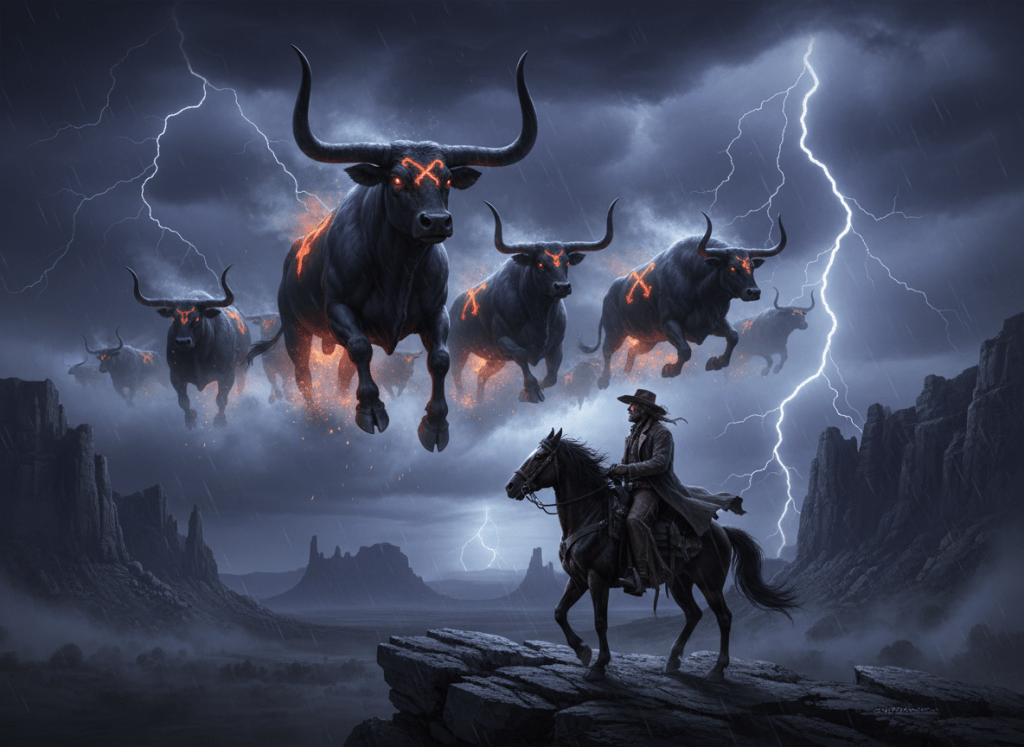
    There’s something about this song that makes a room go quiet, even before the chorus rolls in like distant thunder. It sounds like a legend passed down around a campfire for a hundred years, but it was written in 1948 by one man, Stan Jones. And he was an Arizona boy, born in 1914 in Douglas, down near the Mexican border.

    Jones grew up around ranch country and cowboys. By his own account, the song came from a story an old cowhand told him when he was about twelve. The two were watching a storm build over the desert, and the old man pointed to the clouds and described phantom cowboys, doomed to chase a herd of fiery-eyed cattle across the sky forever. Any rider still on earth who saw them, the old man said, had best take it as a warning to mend his ways. Young Stan never forgot it.

    Years later, after serving in the Navy during the Second World War, Jones was working as a park ranger in Death Valley. He had never taken songwriting very seriously, but he remembered that old tale and set it to a haunting, galloping melody. When Hollywood film crews came to Death Valley to shoot Westerns, Jones got to know some of the people involved, and his songs began to find their way to the right ears. It’s a lovely picture: a ranger in the hot desert, with a head full of songs and nobody quite knowing it yet.

    The song was published in 1949, and suddenly everyone wanted it. Burl Ives recorded it first, but the big hit belonged to bandleader Vaughn Monroe, whose deep, booming voice seemed made for it. His version went all the way to number one and stayed there for many weeks. Bing Crosby, Frankie Laine, and Peggy Lee all recorded it that same year, and it became one of the best-loved songs of 1949. Jones went on to write songs for several John Ford Westerns, including the title song for The Searchers, and he even did some acting before he died in 1963, still a young man at forty-eight.

    Johnny Cash brought the song back to life in 1979, thirty years after it was first a hit. He recorded it for his album Silver, which marked his twenty-fifth year in music. His plainspoken, weathered delivery gave the old legend a new kind of gravity, and his single climbed to number two on the country charts. For many listeners, his is now the version they hear in their heads.

    Since then, the song has been recorded hundreds of times, by country singers, rock bands, surf-guitar groups, and orchestras. The Outlaws took a hard-driving rock version onto the pop charts in 1980. Western music historians regularly rank it among the greatest cowboy songs ever written. That is quite a legacy for a campfire story told to a twelve-year-old boy under an Arizona sky.

  • Bridge Over Troubled Water

    🎵 Sing along with the full lyrics at LyricFind

    Bridge Over Troubled Water
    Written by Paul Simon, 1969

    Paul Simon wrote this one alone, in the summer of 1969, and he said later that he had no idea where it came from — it arrived almost fully formed, and he knew right away it was better than anything he’d written before.

    He’d been listening to the gospel group the Swan Silvertones, whose 1958 recording of “Mary Don’t You Weep” includes a line, ad-libbed by lead singer Claude Jeter, about being a bridge over deep water. That phrase lodged itself in Simon’s mind, and the gospel chord changes came along with it. Simon never hid the debt — on The Dick Cavett Show in April 1970, he said simply, “I guess I stole it.”

    Then came the part he came to regret. Simon thought the song needed a pure, high, hymn-like voice, so he handed it to Art Garfunkel to sing alone. Garfunkel didn’t want it — he thought Simon should sing his own song, and he liked the way Simon had done it on the demo. Simon insisted. For years afterward he watched audiences rise to their feet for Garfunkel, thinking to himself that he was the one who’d written it. It was one of several tensions that ended the partnership; the album turned out to be their last.

    Simon had only written two verses. Garfunkel and producer Roy Halee wanted a bigger finish, so Simon wrote a third one right there in the studio. The nickname “silver girl” in that verse belongs to his girlfriend and later wife, Peggy Harper, who had just found her first gray hairs and was not taking it well — he was teasing her. For decades a rumor circulated that the line referred to a needle and that the song was secretly about heroin. It isn’t, and Simon has said so plainly.

    The piano that carries the whole thing was played by Larry Knechtel, a Los Angeles session player with a gospel background who later joined the band Bread. It took him roughly two days to work out the part. Behind him were Hal Blaine on drums and Joe Osborn on bass — the Wrecking Crew, the unnamed musicians on a remarkable number of the records we all grew up with.

    It reached No. 1 on the Billboard Hot 100 on February 28, 1970, and stayed there six weeks, finishing as the No. 1 song of the entire year. It went to No. 1 in the U.K., Canada, France, and New Zealand as well, and has sold more than six million copies. At the 1971 Grammys it took Record of the Year and Song of the Year, with five Grammys in all for the song and Album of the Year for the record. Aretha Franklin sang it at that ceremony while Simon and Garfunkel watched from the audience. Her own version followed that spring, went to No. 1 on the R&B chart, and won her a Grammy too. Elvis Presley, Peggy Lee, and Earl Scruggs recorded it as well, and Johnny Cash came back to it near the end of his life, in a 2002 duet with Fiona Apple.

    One last footnote: the song that finally knocked it out of the No. 1 spot was the Beatles’ “Let It Be” — another hymn-shaped ballad.

  • Sweet Baby James

    🎵 Sing along with the full lyrics at LyricFind

    Sweet Baby James (written by James Taylor, 1969; released 1970)

    James Taylor wrote this song for the son of his older brother Alex, a baby boy who was also named James, and in fact was named after his uncle. Taylor had just come back to the States after being signed to The Beatles’ Apple label and discovered that his brother had become a father. The first verse came to him while he was driving down to North Carolina to meet his new nephew, and the second verse arrived about two weeks later as he drove home from a visit with Arlo Guthrie in Stockbridge, Massachusetts. That explains the snowy New England scenery in the lyrics, with its turnpike, Boston, and the Berkshires. Taylor set out on purpose to blend a cowboy song with a lullaby, and he later said its verses used the most intricate rhyming pattern he ever wrote. It’s written as a waltz, in 3/4 time, and the chorus tips its hat to “Rock-a-bye Baby.” 

    Here’s a curious twist: the song opened and gave its name to Taylor’s 1970 breakthrough album, and it was released as that album’s first single, yet it never charted. The album did just fine, though, climbing to #3 on the Billboard album chart and eventually going triple platinum on the strength of songs like “Fire and Rain” and “Country Road.” Over the years “Sweet Baby James” has become one of his best-known and best-loved tunes, and it appeared on his 1976 Greatest Hits collection, which sold at diamond level. Perhaps most telling of all, Taylor himself considers it the best song he ever wrote, and he still performs it in concert today.

  • Do You Hear What I Hear?

    🎵 Sing along with the full lyrics at LyricFind

    Do You Hear What I Hear?
    Words by Noël Regney, music by Gloria Shayne Baker. Written in October 1962.

    This gentle Christmas song, which sounds like a lullaby, was written during one of the most frightening weeks of the twentieth century.

    In October 1962, the Cuban Missile Crisis had the whole world holding its breath. The United States and the Soviet Union stood at the edge of nuclear war, and many families wondered whether they would see another Christmas. That same month, a New York record producer asked songwriter Noël Regney for a holiday song. Regney was reluctant. He felt Christmas had become far too commercial.

    Regney had seen the cost of war up close. He was born in Strasbourg, France, and when the Nazis occupied his region he was forced into the German army. He deserted and joined the French Resistance. So when he walked through Manhattan that anxious October and saw mothers pushing babies in strollers, it moved him deeply. He wrote the lyrics as a prayer for peace, telling the story of the first Christmas as the news passes from the night wind to a little lamb, a shepherd boy, a mighty king, and finally to all people.

    His wife, Gloria Shayne Baker, wrote the melody. She was an accomplished pianist and songwriter who also wrote the 1961 pop hit “Goodbye Cruel World.” The couple later said they couldn’t get through their own song without breaking down, because the danger felt so real at the time. Years later, Regney said he was surprised that so many people knew the song without realizing it was a plea for peace. Its closing call for people everywhere to pray for peace was the heart of it all along.

    The Harry Simeone Chorale released the first recording shortly after Thanksgiving in 1962, and it sold more than a quarter of a million copies that season. Bing Crosby recorded it the following year, and his version became a million-seller that brought the song into homes across America. Since then it has been sung by everyone from Perry Como to Whitney Houston to Carrie Underwood. Josh Groban’s rich, soaring rendition, shown here, carries the song’s hopeful message to a new generation.

    Next time you sing it, you might listen for what Regney heard: not just a Christmas story, but a hope for peace in a very worried world.

  • Little Drummer Boy

    🎵 Sing along with the full lyrics at LyricFind

    Little Drummer Boy

    Written by Katherine Kennicott Davis, 1941

    Chances are you’ve always assumed this one was ancient, something handed down through the centuries. It isn’t. It was written in 1941 by a composer living in Concord, Massachusetts, and it came to her while she was trying to take an afternoon nap.

    Katherine Kennicott Davis was born in St. Joseph, Missouri, in 1892, and wrote her first piece of music at fifteen. She studied at Wellesley College, and over a long, quiet career she wrote more than six hundred works, many of them for school choirs that no one outside a schoolroom ever heard. She called this one “Carol of the Drum.” On her manuscript she credited the tune to a Czech carol she had freely adapted, and she wrote the English words herself. It was a modest little piece, and she expected nothing more from it.

    For ten years, not much happened. Then the Trapp Family Singers recorded it in 1951. They were the real Austrian family whose story later became The Sound of Music. In 1957 an arranger named Jack Halloran recorded it with his singers for an album on Dot Records, but Dot chose not to put it out as a single. Henry Onorati, a producer who had worked on that record, left Dot the next year to run 20th Century-Fox Records. He brought the song to his friend Harry Simeone, a conductor and arranger. Simeone hired many of the same singers, made a recording very close to Halloran’s, and gave the song a new name: “The Little Drummer Boy.” Along the way, the ox and ass of Davis’s original became an ox and lamb.

    The Harry Simeone Chorale’s record came out in December of 1958 and climbed to number 13 on the Billboard Hot 100. It came back onto the chart every Christmas season through 1962, and it has been recorded by hundreds of artists since. The most unexpected version came in 1977, when Bing Crosby and David Bowie sang it together on television, weaving it around a new counter-melody called “Peace on Earth.”

    And here’s the part that still stings. When the record came out, Simeone and Onorati were both listed as songwriters, though neither man had written the song. Davis learned it was a hit only when a friend called to tell her it was on the radio everywhere. She stood up for her rights and secured her credit and royalties, but the two men’s names stayed on the song beside hers. She never cared for the new title, either, and called it “cutie cute.” Katherine Davis died in 1980, and her original manuscript is held at Wellesley College.

  • O Holy Night

    [Verse 1]
    O Holy night! The stars are brightly shining
    It is the night of our dear Savior’s birth
    Long lay the world in sin and error pining
    ‘Til He appeared and the soul felt its worth
    A thrill of hope the weary world rejoices
    For yonder breaks a new and glorious morn
    Fall on your knees; O hear the Angel voices!
    O night divine, O night when Christ was born
    O night, O Holy night, O night divine!

    [Verse 2]
    Led by the light of Faith serenely beaming
    With glowing hearts by His cradle we stand
    So led by light of a star sweetly gleaming
    Here come the Wise Men from Orient land
    The King of kings lay thus in lowly manger
    In all our trials born to be our friend
    He knows our need, to our weakness is no stranger
    Behold your King; before Him lowly bend
    Behold your King; before Him lowly bend.

    [Verse 3]
    Truly He taught us to love one another;
    His law is love and His Gospel is Peace
    Chains shall He break, for the slave is our brother
    And in His name, all oppression shall cease
    Sweet hymns of joy in grateful chorus raise we
    Let all within us Praise His Holy name
    Christ is the Lord; O praise His name forever!
    His power and glory evermore proclaim
    His power and glory evermore proclaim.

    O Holy Night
    Words by Placide Cappeau, 1847; music by Adolphe Adam, 1847; English translation by John Sullivan Dwight, 1855

    You probably know this one by heart, and many of us have sung it every December for as long as we can remember. What’s surprising is how unlikely it was that we’d ever get to sing it at all. It began with a French wine merchant who wrote poetry on the side. It was set to music by a man who wrote ballets for a living. And at least one bishop wanted nothing to do with it.

    The wine merchant was Placide Cappeau, of the little town of Roquemaure in the south of France. As a boy of eight he lost his right hand in an accident, when a friend was playing with a gun. That turned him away from the family barrel-making trade and toward books and poetry instead. In 1847 the parish church had its organ newly repaired, and the priest asked Cappeau for a Christmas poem to mark the occasion. Cappeau wrote it on a long coach ride to Paris, and once he had it, he decided it deserved music. He brought it to his friend Adolphe Adam, a composer best known for the ballet Giselle. That Christmas it was sung at midnight Mass in Roquemaure, and from there it spread all over France.

    Not everyone was pleased. One French bishop complained that the carol had no musical taste and no religious spirit at all, and a number of churches quietly set it aside. The ordinary people of France went right on singing it at home. Then, in 1855, it crossed the Atlantic with John Sullivan Dwight. He was a former Unitarian minister and one-time member of the Brook Farm community outside Boston, and by then one of America’s leading music critics. Dwight translated it freely, but he held on to one of Cappeau’s boldest ideas. The French third verse says Christ sees a brother where there was once only a slave. Dwight made it ring even louder: “for the slave is our brother.” He printed it six years before the Civil War, at a time when those were not gentle words.

    It’s a remarkable journey for a poem written to celebrate a church organ. It was scolded by a bishop and carried into English as a song about freedom. Today it is sung by millions of people who would never guess it caused any trouble at all.