Campfire Reunions

Your Singalong Favorites with the Stories Behind the Songs

  • Annie’s Song

    By John Denver.

    🎵 Sing along with the full lyrics at LyricFind

    “Annie’s Song” was written by John Denver for his wife, Annie Martell, and it may hold the record for the most productive chairlift ride in music history. In 1973, after he and Annie had reconciled following a brief but painful separation, Denver went skiing in Aspen. Riding the Ajax chairlift back up Aspen Mountain, still buzzing from a difficult run, he found himself overwhelmed by the beauty around him — the colors, the sounds, the mountain air — and every image led him back to Annie. By the time he reached the top, roughly ten and a half minutes later, the song was finished. He skied down, went home, and wrote it out. That’s why the lyrics read like a nature inventory of love: forests, mountains in springtime, a walk in the rain, a sleepy blue ocean. Annie herself later said that while it began as a love song to her, for John it became something closer to a prayer.

    Released in June 1974, it became Denver’s second American #1, holding the top of the Billboard Hot 100 for two weeks that July, and it topped the Easy Listening chart as well. Across the Atlantic it did something none of his other songs managed: it went to #1 in the UK, his only major British hit. In a lovely echo, an instrumental version by Irish flutist James Galway became his only major British hit four years later. The marriage that inspired the song sadly ended in divorce in 1982, but the song outlived it beautifully — still a staple at weddings and one of the purest love songs of the 1970s.

  • Take Me Home, Country Roads

    By John Denver

    🎵 Sing along with the full lyrics at LyricFind

    “Take Me Home, Country Roads” — the song that made West Virginia “almost heaven” — was written by three people who had never set foot in West Virginia. Songwriters Bill Danoff and Taffy Nivert, a husband-and-wife duo who performed as Fat City, started it while driving Clopper Road in Maryland on the way to Nivert’s family reunion. Danoff, a Massachusetts kid, drew his mountain-state imagery from postcards a friend sent him and from the “hillbilly music” he’d picked up as a boy on WWVA radio out of Wheeling, West Virginia — a place so far away it might as well have been Europe to him. He even briefly considered making the song “Massachusetts” (the syllables fit!), but “Blue Ridge Mountains” and “Shenandoah River” were simply better songwriter words, and they pointed him to West Virginia.

    The pair originally hoped to pitch the song to Johnny Cash. Instead, in December 1970, they opened for a still-unknown John Denver at a Washington, D.C. club, played him the unfinished song at their apartment afterward, and ended up staying up all night with him finishing it. Denver released it in April 1971, and after a slow start, it caught fire that summer, soared into Billboard’s Top 5, went Gold, and turned John Denver into a star overnight. The afterlife is even better: in 2014, West Virginia officially adopted it as a state anthem — a love song to a place its writers had only imagined. And Danoff wasn’t done with lightning: he later co-founded the Starland Vocal Band of “Afternoon Delight” fame. But nothing ever topped the country roads that never actually led to West Virginia.

  • Back Home Again

    By John Denver

    🎵 Sing along with the full lyrics at LyricFind

    “Back Home Again” was written by John Denver as the title track of his 1974 album — the record that made him arguably the biggest star in American music that year. The song is a simple, warm homecoming story: a long-hauler rolling down the highway toward the farm, where supper’s on the stove and his wife (expecting their child) is waiting. Released in September 1974, it hit #1 on the country chart — Denver’s first of three country chart-toppers — spent two weeks atop the adult contemporary chart, and reached the pop Top 5. The album itself went to #1 and multi-platinum, stacked with “Annie’s Song,” “Thank God I’m a Country Boy,” and “Grandma’s Feather Bed,” with Annie herself smiling beside John on the cover.

    Then came the fireworks. At the 1975 CMA Awards, “Back Home Again” won Song of the Year, and Denver was named Entertainer of the Year — country music’s top honor. Nashville’s old guard was not amused that a granola-friendly folk singer from Aspen had conquered their genre, and the previous year’s winner, Charlie Rich, made his feelings unforgettable: opening the envelope to announce the Entertainer of the Year on live television, Rich read Denver’s name, pulled out a lighter, and set the envelope on fire. It remains one of the most infamous moments in country awards history. Denver, watching via satellite, simply smiled and accepted graciously — and the song about the sweetness of coming home outlived all the controversy about whether he belonged.

  • I’ll Never Find Another You

    Performed by The Seekers.

    🎵 Sing along with the full lyrics at LyricFind

    “I’ll Never Find Another You” was written and produced by Tom Springfield — born Dion O’Brien, and yes, the older brother of pop legend Dusty Springfield. When the Seekers, a clean-cut folk-pop quartet from Melbourne, sailed to England in 1964 hoping to find work, Springfield took them under his wing and handed them this song. They recorded it at Abbey Road Studios that November, and it became a rocket ship: their very first UK single shot to #1 in February 1965 and ended up the second-best-selling record in Britain that entire year — in the thick of Beatlemania, no less. It hit #4 in America and #1 back home in Australia, making the Seekers the first Australian band ever to sell a million copies of a single and the first to land in the Top 5 of Australia, Britain, and the US simultaneously.

    A few fun wrinkles: Springfield was a master melodic borrower, and this tune’s DNA draws on old folk melodies including the Irish classic “The Rose of Tralee.” And the group’s image was famously wholesome — one rock critic of the day affectionately described them as a cuddly girl-next-door fronting three fellows who looked like bank tellers. But that girl next door was Judith Durham, owner of one of the purest voices of the 1960s, and she’s the reason the record still gives people chills. Springfield went on to write nearly all their hits — “A World of Our Own,” “The Carnival Is Over,” and “Georgy Girl” — but this gospel-tinged promise of devotion was the one that started it all.


  • Lemon Tree
  • Thirsty Boots

    Song written by Eric Andersen

    🎵 Sing along with the full lyrics at LyricFind
    (After singing, remember to hit the “back” button to return to Campfire Reunions!)

    Thirsty Boots

    Written by Eric Andersen, 1965

    Some songs are about marching, and some are about coming home after the march. “Thirsty Boots” is one of the gentle ones, a song of welcome for someone returning tired from a hard road. Eric Andersen wrote it during the civil rights years, when young people from all over the country were traveling South to register voters and stand up for equal rights. In the liner notes of his album, he said he wrote it for a friend who had done civil rights work, adding, “Having never gone down to Mississippi myself, I wrote the song about coming back.” That’s what gives it such tenderness. Instead of describing the struggle, it offers a friend a place to sit down, rest, and be looked after for a while.

    Andersen was part of the lively Greenwich Village folk scene of the early 1960s, and he made his debut at Gerdes Folk City in 1964 in a live audition for Vanguard Records. His friend and fellow songwriter Phil Ochs had a hand in the song’s beginnings. Andersen first sang part of it to Ochs in the 14th Street subway station as the two headed down to the Village, and he has said Ochs encouraged him to finish it.

    The finishing touch came in a delightfully unlikely place. Judy Collins has told audiences over the years that Andersen wrote the song’s last verse on a matchbook cover while sitting in her bathroom, and Andersen tells the same story himself in the documentary Greenwich Village: Music That Defined a Generation. Collins clearly liked what came out of that bathroom. She was the first to release the song, in 1965, on her Fifth Album, a year before Andersen’s own version appeared on his 1966 album ‘Bout Changes ‘n’ Things. Her lovely, clear-voiced recording is the one many people first heard, and it helped carry the song well beyond the coffeehouses.

    “Thirsty Boots” was never a hit single, but it became something longer-lasting: a song that other musicians love to sing. It’s one of Andersen’s best-known songs, and it has been recorded by John Denver, Anne Murray, and the Kingston Trio, among others. Even Bob Dylan took a turn at it. He recorded the song in 1970 for his Self Portrait album, but it was left off the final record and stayed on the shelf until 2013, when it came out on The Bootleg Series Vol. 10: Another Self Portrait. More than half a century after it was written, it’s still a quiet favorite, a song that reminds us to take care of the people who take care of the world.

  • Changes

    🎵 Sing along with the full lyrics at LyricFind

    “Changes” was written in 1965 by Phil Ochs, the fiery Greenwich Village folk singer who called himself a “singing journalist” — he’d actually started out studying journalism before deciding a guitar was mightier than the pen. Ochs was famous for his protest songs (“I Ain’t Marching Anymore,” “Draft Dodger Rag”), which made “Changes” a genuine shock to his audience: it contains no politics at all. Instead, it’s a quiet, aching meditation on impermanence — seasons turning, love fading, time moving — and it revealed that the movement’s sharpest topical writer was also one of its most tender poets. He introduced it on his 1966 live album Phil Ochs in Concert, and it quickly became one of his most beloved songs.

    The song traveled in some surprising directions. British pop singer Crispian St. Peters (of “The Pied Piper” fame) took “Changes” onto both the US and UK charts in 1966, and folk artists like Gordon Lightfoot and Ian & Sylvia recorded it too. Strangest of all: in 1971, a Swedish version called “En Kväll om Sommarn” was recorded by Anni-Frid Lyngstad — who just a few years later became world-famous as Frida of ABBA. Ochs himself never found the fame of his friend and rival Bob Dylan, and his life ended tragically young in 1976, at just 35. But “Changes” endures as perhaps his most personal legacy — proof that the great protest singer’s deepest song was about the one thing no one can protest: time itself.

  • Danny Boy

    🎵 Sing along with the full lyrics at LyricFind

    “Danny Boy,” the beloved unofficial anthem of Ireland, was written by an English lawyer — Frederic Weatherly of Bath, who reportedly never set foot in Ireland in his life. Weatherly was a barrister by day and an astonishingly prolific lyricist by night (he penned some 3,000 songs and poems), and in 1910 he wrote the words to “Danny Boy” set to a forgettable tune of his own. It went nowher

    The magic arrived by mail. Weatherly’s Irish-born sister-in-law, Margaret “Jess” Weatherly, was living in a Colorado mining camp during the gold rush days when she heard Irish miners playing a hauntingly beautiful old melody called the “Londonderry Air.” She sent a transcription across the Atlantic to Frederic — and his orphaned lyrics fit the tune almost perfectly. Published in 1913, the combination became one of the most beloved songs on Earth, recorded by everyone from opera great Ernestine Schumann-Heink (the first, in 1915) to Judy Garland, Elvis Presley, Johnny Cash, and Willie Nelson.

    The melody has its own romance: it was first written down around 1851 by Jane Ross of Limavady, County Londonderry, who heard an itinerant fiddler playing it outside her window. She hurriedly jotted down the notes — and when she went out to learn the musician’s name, he had vanished, never to be identified. Had she not scribbled fast, the world might never have gotten “Danny Boy” at all. So this “quintessentially Irish” treasure is really a three-way collaboration: an anonymous Irish street musician, a homesick transcription from a Colorado gold camp, and an English lawyer who never saw Ireland — proof that a great song doesn’t care about borders.

  • Amazing Grace

    🎵 Sing along with the full lyrics at LyricFind

    Amazing Grace

    Words by John Newton, 1772; music: traditional American melody “New Britain,” first published 1829

    Few songs carry a story quite like this one. John Newton, the man who wrote these words, spent his early life at sea, and for years he worked in the Atlantic slave trade. As a young sailor he was in some ways a captive himself. He was left stranded on the coast of West Africa, where he was mistreated and half-starved by the trader he worked for. After he was rescued, a violent storm in March 1748 nearly sank his ship. Newton later pointed to that night as the turning point of his life.

    That turning, though, was slow. Newton went on to captain slave ships for several more years before leaving the sea because of ill health. Eventually he became a clergyman in the Church of England and settled in the small market town of Olney, in Buckinghamshire. There he wrote hymns for his congregation’s weekly meetings, often to go along with that week’s sermon. He wrote this one in late 1772 for a New Year’s Day service. It was published in 1779 in a collection called Olney Hymns, which he put together with his friend, the poet William Cowper. In that book it went by a much plainer title: “Faith’s Review and Expectation.”

    In his later years Newton came to speak openly against the trade he had once served. In 1788 he published a pamphlet describing its cruelties, and he became an ally of William Wilberforce in the campaign to end it. Newton lived just long enough to see Britain outlaw the slave trade in 1807, and he died in December of that same year.

    The melody we sing today came from a different place and time. In England the hymn was never widely popular. In America, however, it traveled through camp meetings and shape-note singing schools, and it met its tune there. The melody known as “New Britain,” whose composer is unknown, first appeared in an 1829 songbook. In 1835 a South Carolina singing master named William Walker paired it with Newton’s words in his popular collection Southern Harmony. The two have been together ever since. The well-loved final verse that many people sing today wasn’t written by Newton at all. It came from an older hymn and had become attached to “Amazing Grace” by the mid-1800s, when Harriet Beecher Stowe included it in Uncle Tom’s Cabin in 1852.

    As a hymn it never needed the charts, yet it found its way onto them anyway. Judy Collins recorded it in 1970 in St. Paul’s Chapel at Columbia University, choosing the chapel for its natural echo. Her version reached number 15 in the United States and number 5 in Britain, and it stayed on the British charts for 67 weeks. Two years later a bagpipe version by the Royal Scots Dragoon Guards went all the way to number 1 in Britain. Also in 1972, Aretha Franklin made it the title song of her live gospel album, which became the best-selling record of her career.

  • Blowin’ in the Wind

    🎵 Sing along with the full lyrics at LyricFind

    Bob Dylan was just 21 when he wrote this anthem — and by his own account, the first version poured out in about ten minutes one April afternoon in a Greenwich Village café. The melody wasn’t new: Dylan adapted it from “No More Auction Block,” an old spiritual sung by formerly enslaved people, which gives the song its haunting, hymn-like bones. It first appeared not on a record but in a folk magazine called Broadside, and Dylan released it on The Freewheelin’ Bob Dylan in 1963. The song even has its own scandal: a New Jersey high school student named Lorre Wyatt was rumored to have written it and sold it to Dylan — a complete myth, but one that shadowed Dylan for a decade before Wyatt publicly came clean.

    But it was Peter, Paul and Mary who turned it into a phenomenon, and that happened because of a shrewd manager. Albert Grossman represented both Dylan and the trio — he had assembled Peter Yarrow, Noel Paul Stookey and Mary Travers himself in 1961, envisioning an updated version of Pete Seeger’s Weavers — and he handed his young songwriter’s tune to his hit-making group. Their version, released in June 1963, sold faster than any record Warner Bros. had ever put out, climbed to #2 on the Billboard Hot 100, and won two Grammy Awards. Overnight it made Dylan famous as a songwriter and made the trio the musical voice of the civil rights movement.

    Then came the moment that sealed it. On August 28, 1963, Peter, Paul and Mary stood before a quarter-million people at the March on Washington and sang “Blowin’ in the Wind” — the same afternoon Dr. Martin Luther King Jr. delivered his “I Have a Dream” speech. Two years later they marched from Selma to Montgomery. Their activism cost them: the trio received hate mail and death threats, and kept going anyway. Decades later, Mary Travers said this was the song that meant the most to her, because its questions never stopped being current — you could open any morning’s newspaper and find one of them staring back. Perhaps the finest tribute came from Sam Cooke, who was so struck that a young white songwriter had written it that he was inspired to answer with his own masterpiece, “A Change Is Gonna Come.”

  • Hangman


    🎵 Sing along with the full lyrics at LyricFind
    (After singing, remember to hit the “back” button to return to Campfire Reunions!)

    Hangman
    Traditional, arranged by Peter Yarrow, Joel Hendler, Paul Stookey, Mary Travers, and Milton Okun, 1965.

    Nobody knows who first sang this one. It’s one of the oldest stories in the folk tradition, and it has traveled a long way to reach us.

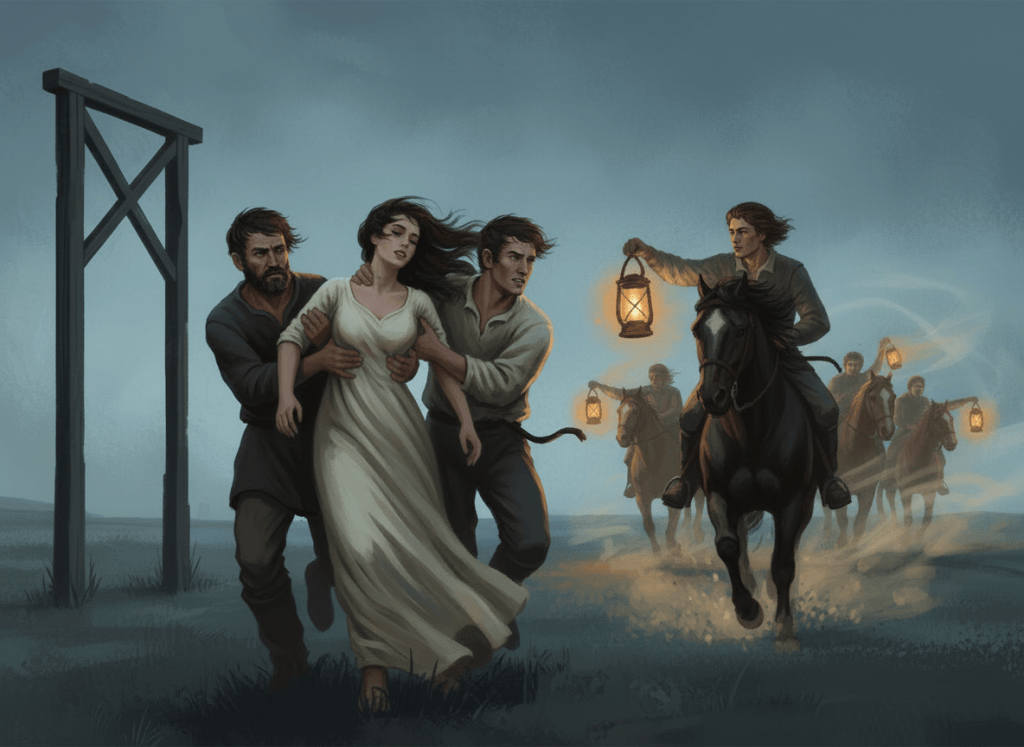
    The story is simple. A young woman stands at the gallows and begs the hangman to wait a little while. She sees someone coming. One by one her family arrives, and she asks each of them whether they’ve brought silver or gold to buy her freedom. Each one has come empty-handed, and some have come only to watch. The last to arrive is her true love. Whether the ransom is paid, and whether she goes free, depends on who’s singing it. In the version by Peter, Paul and Mary, the maiden is rescued by her true love.

    What’s curious is that the English-language versions never say what she did wrong. The Harvard scholar Francis James Child, who collected the old ballads of England and Scotland in the late 1800s and numbered this one Child Ballad No. 95, called the English versions “defective and distorted.” He felt they had lost the beginning of the story and kept only the ransom scene. Versions elsewhere in Europe fill in the gap: in many of them she has been captured by pirates. In an old English fairy tale called “The Golden Ball,” she is to be hanged for losing a golden ball, and her sweetheart has to go on a spooky adventure to get it back. Some scholars think the “gold” was never really about money. They suggest it stood for her good name.

    The song turns up almost everywhere: English villages, the Appalachian mountains, Sweden, Germany, Hungary, Lithuania, and Finland, where about fifty versions have been collected. Americans may know it from Lead Belly, who recorded it as “The Gallis Pole” in 1939, or from Odetta. It even reached rock audiences in 1970, when Led Zeppelin recorded “Gallows Pole.”

    Peter, Paul and Mary’s version was never released as a single, so it didn’t chart. The album it came from, See What Tomorrow Brings, reached No. 11 on the Billboard album chart and went gold.

  • On the Road to Sedona

    Original song by Vicky Oldham

    On the road to Sedona,
    In my heart the only way I know,
    On the road to Sedona,
    Following my hopes and dreams I go.

    For so long, I felt uncertain,
    Imagining that everywhere’s the same,
    I was chained to my vocation,
    Lost in life, with no one else to blame.

    Traveling cross Northern Arizona,
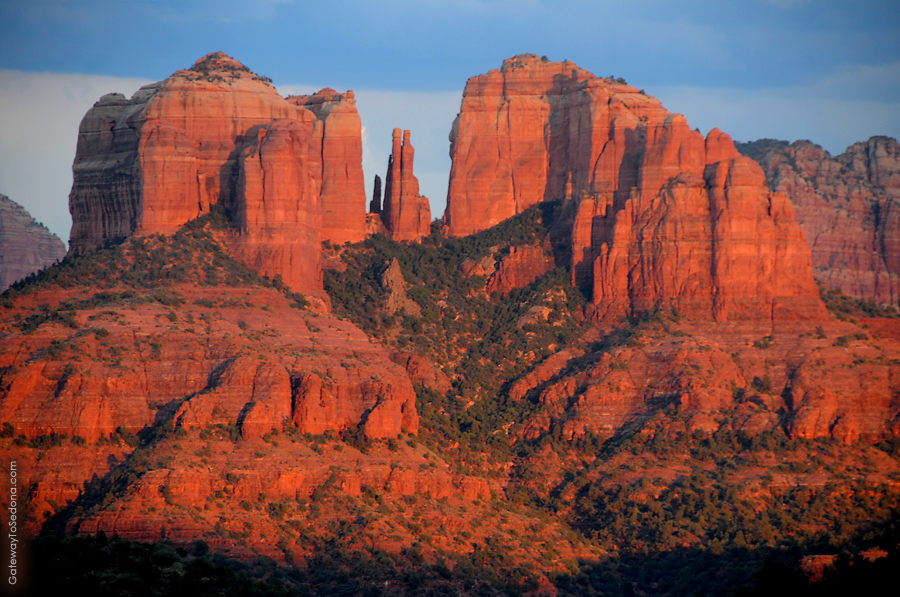
    First time in this magic red rock place,
    Captivated by my first impression,
    One my thoughts never could erase.

    On the road to Sedona,
    In my heart, the only way I know,
    On the road to Sedona,
    Following my hopes and dreams I go.

    Going down the canyon, I’m reflecting,
    On people in my life and where I’ve been,
    I finally see the light and hear the calling,
    And my inspiration once again.

    Aspiring as a a poet or a painter,
    Discouraged in the past I never tried,
    Following my dream in desperation.
    Now I know my passion never died.

    On the road to Sedona,
    In my heart, the only way I know,
    On the road to Sedona,
    Following my hopes and dreams I go.

    I’m not young, but I’m ready,
    I can be whoever I will be,
    So I make this promise and commitment,
    As I reach my final destiny.

    And as I cross the Gateway To Sedona,
    The past is gone and fortune waits for me,
    Red rock spires rise to greet me,
    There’s no other place for me.

    On the road to Sedona,
    In my heart, the only way I know,
    On the road to Sedona,
    Following my hopes and dreams I go.

    On the road to Sedona,
    In my heart, the only way I see,
    On the road to Sedona,
    Sedona’s the only home for me.

  • Verde Valley, Emerald in the Desert

    Song written and composed by Vicky Oldham in 2015.

    (Key of D)

    [VERSE 1]

    A river winds across this desert valley,

    Trees and vineyards follow where it goes.

    Lush and green by summer, turning gold by fall,

    This is the Verde Valley, so fair and beautiful.

    [CHORUS]

    Verde Valley, Verde Valley,

    An emerald in the desert, where the river goes,

    While eagles soar above, this place I know and love,

    Clarkale to Camp Verde, where the river flows,

    The Verde Valley ever is my home.

    [VERSE 2]

    Sycamores and sprawling desert willows,

    Cloak the winding river with their green and golden tones,

    With wildlife and birds, as the season turns,

    Round the river valley, my Arizona home.

    [CHORUS REPEAT]

    Verde Valley, Verde Valley

    An emerald in the desert, where the river goes,

    While eagles soar above, this place I know and love,

    Clarkale to Camp Verde, where the river flows.

    The Verde Valley ever is my home.

    [VERSE 3]

    There’s Cottonwood and Clarkdale and Camp Verde,

    and the quirky artsy mountain town Jerome,

    Onward north to beautiful Sedona,

    Where rocks with crimson hues by sunset glow.

    [CHORUS REPEAT]

    Verde Valley, Verde Valley

    An emerald in the desert, where the river goes,

    While eagles soar above, this place I know and love,

    Clarkale to Camp Verde, where the river flows.

    The Verde Valley ever is my home.

    [VERSE 4]

    Place of ancient glyphs and Indian ruins,

    Early settler history, and mysteries to impart,

    Where purple mountains rise into the azure skies,

    My home the Verde Valley is forever in my heart…

    [CHORUS REPEAT]

    Verde Valley, Verde Valley

    An emerald in the desert, where the river goes,

    While eagles soar above, this place I know and love,

    Clarkale to Camp Verde, where the river flows.

    The Verde Valley ever is my home.

  • Always On My Mind

    🎵 Sing along with the full lyrics at LyricFind

    “Always on My Mind” began as a genuine marital apology. Songwriter Wayne Carson — who’d already written the Box Tops’ smash “The Letter” — was stuck at a Memphis recording studio ten days longer than promised, and when he phoned his wife in Missouri to say he’d be even later, she let him have it. Fumbling for something to say, he told her she’d been on his mind the whole time. The phrase hit him like a hammer; he got off the phone fast and started writing. He finished it in Memphis with fellow writers Johnny Christopher and Mark James, and later summed the whole thing up perfectly: it’s one long apology.

    The song then spent a decade looking for the right voice. Gwen McCrae released it first in 1972, Brenda Lee recorded it that same year (it stalled at #45 on the country chart), and Elvis Presley cut his version just weeks after separating from Priscilla — which gave the King’s aching reading an autobiographical weight fans have heard in it ever since. Still, the song hadn’t quite landed. Then in 1982, Willie Nelson suggested it to Merle Haggard for a duet album. Haggard passed. So Willie recorded it alone — and turned a modest also-ran into the biggest hit of a career that had already lasted twenty-five years. It went to #1 country, cracked the pop Top 5, won the Grammy for Song of the Year, and took the CMA Song of the Year award two years running. Where earlier singers sounded like men begging to be let back in the door, Willie sounds like a man simply telling the truth, too late — and that’s why his is the version the world remembers. AllMusic counts more than 300 recordings of the song; even the Pet Shop Boys took a synth-pop version to #1 in Britain in 1987. But it’s Willie’s.

  • Too-ra-loo-ra-loo-ra

    “Too-ra-loo-ra-loo-ral, Too-ra-loo-ra-li,
    Too-ra-loo-ra-loo-ral, hush now, don’t you cry!
    Too-ra-loo-ra-loo-ral, Too-ra-loo-ra-li,
    Too-ra-loo-ra-loo-ral, an Irish lullaby.”

    Over in Killarney
    Many years ago,
    Me Mither sang a song to me
    In tones so sweet and low.
    Twas a simple little ditty,
    In her good old Irish way,
    And l’d give the world to hear
    My mother sing today.

    “Too-ra-loo-ra-loo-ral, Too-ra-loo-ra-li,
    Too-ra-loo-ra-loo-ral, hush now, don’t you cry!
    Too-ra-loo-ra-loo-ral, Too-ra-loo-ra-li,
    Too-ra-loo-ra-loo-ral, an Irish lullaby.”

    Oft in dreams I wander
    To that cot again,
    I feel her arms a-huggin’ me
    As when she held me then.
    And I hear her voice a -hummin’
    As in the days of yore,
    When she rocked me fast asleep
    Outside the cabin door.

    “Too-ra-loo-ra-loo-ral, Too-ra-loo-ra-li,
    Too-ra-loo-ra-loo-ral, hush now, don’t you cry!
    Too-ra-loo-ra-loo-ral, Too-ra-loo-ra-li,
    Too-ra-loo-ra-loo-ral, an Irish lullaby.”


    This performance is a great example of the

  • Will the Circle Be Unbroken

    Traditional hymn later popularized by the Carter Family.

    🎵 Sing along with the full lyrics at LyricFind
    (After singing, remember to hit the “back” button to return to Campfire Reunions!)

  • The Battle Hymn of the Republic

    Mine eyes have seen the glory of the coming of the Lord:
    He is trampling out the vintage where the grapes of wrath are stored;
    He hath loosed the fateful lightning of His terrible swift sword:
    His truth is marching on.

    Chorus:
    Glory, glory, hallelujah!
    Glory, glory, hallelujah!
    Glory, glory, hallelujah!
    His truth is marching on.

    I have seen Him in the watch-fires of a hundred circling camps,
    They have builded Him an altar in the evening dews and damps;
    I can read His righteous sentence by the dim and flaring lamps:
    His day is marching on.

    Chorus

    I have read a fiery gospel writ in burnished rows of steel:
    “As ye deal with my condemners, so with you my grace shall deal;
    Let the Hero, born of woman, crush the serpent with his heel,
    Since God is marching on.”

    Chorus

    He has sounded forth the trumpet that shall never call retreat;
    He is sifting out the hearts of men before His judgment-seat:
    Oh, be swift, my soul, to answer Him! be jubilant, my feet!
    Our God is marching on.

    Chorus

    In the beauty of the lilies Christ was born across the sea,
    With a glory in His bosom that transfigures you and me:
    As He died to make men holy, let us die to make men free,
    While God is marching on.

    Chorus

    He is coming like the glory of the morning on the wave,
    He is Wisdom to the mighty, He is Succour to the brave,
    So the world shall be His footstool, and the soul of Time His slave,
    Our God is marching on.

    Chorus


    Rendition by the United States Marines Band:

  • America the Beautiful
  • God Bless America

    By Irving Berlin

    Intro sung by Kate Smith:
    “While the storm clouds gather far across the sea,
    Let us swear allegiance to a land that’s free,
    Let us all be grateful for a land so fair,
    As we raise our voices in a solemn prayer. “

    Everyone:

    God bless America, land that I love,
    Stand beside her and guide her,
    Through the night with the light from above.

    From the mountains to the prairies,
    To the oceans white with foam,
    God bless America, my home sweet home.
    God bless America, my home sweet home.

    God bless America, land that I love,
    Stand beside her and guide her,
    Through the night with the light from above.

    From the mountains to the prairies,
    To the oceans white with foam,
    God bless America, my home sweet home.

    God bless America, my home sweet home.


    My preferred guitar key: D

  • You Are My Sunshine

    Popularized/copyrighted by Jimmie Davis and Charles Mitchell

    You are my sunshine
    My only sunshine
    You make me happy
    When skies are gray
    You’ll never know, dear
    How much I love you
    Please don’t take
    My sunshine away

    The other night, dear
    As I lay sleeping
    I dreamed I held you
    In my arms
    When I awoke, dear
    I was mistaken
    So I hung my head and cried

    You are my sunshine
    My only sunshine
    You make me happy
    When skies are gray
    You’ll never know, dear
    How much I love you
    Please don’t take
    My sunshine away


    Here are some inspiring performances of You Are My Sunshine, starting with the 1940 version that popularized the song.

    And here is more of a home-grown blue grass version:

  • Don’t Think Twice, It’s All Right
  • What A Wonderful World
  • Over the Rainbow

    🎵 Sing along with the full lyrics at LyricFind

    Over the Rainbow

    Written by Harold Arlen and E.Y. “Yip” Harburg, 1939

    It’s hard to picture The Wizard of Oz without this song, but it very nearly didn’t make it into the film. Composer Harold Arlen and lyricist Yip Harburg wrote it for MGM’s 1939 musical, and Arlen later said the melody came to him while his wife, Anya, was driving them down Sunset Boulevard in Los Angeles. He asked her to pull over near Schwab’s Drugstore so he could jot the tune down before it slipped away.

    Harburg wasn’t won over at first. He thought the melody sounded too grand and operatic for a young farm girl from Kansas. Their friend Ira Gershwin suggested Arlen play it a little lighter and brighter, and once he did, Harburg came around. Harburg imagined Dorothy’s world as dry and colorless, so a rainbow would be the most beautiful thing she had ever seen, and he built the song around her longing for a place like that.

    After early previews, studio executives cut the song. They felt it slowed the movie down, and some thought it undignified for a star to sing in a barnyard. Associate producer Arthur Freed and others fought to have it put back, and they won. The song went on to win the Academy Award for Best Original Song, and it became Judy Garland’s signature for the rest of her life. She sang it at nearly every concert she gave for three decades.

    The song did well on the radio in its own day, too. Glenn Miller and his orchestra took it to the top of the charts in 1939. Generations later, in 2001, the Recording Industry Association of America and the National Endowment for the Arts named it the number one song of the twentieth century. The American Film Institute gave it the same top spot among movie songs in 2004. Many younger listeners know it from Hawaiian singer Israel Kamakawiwoʻole, whose gentle ukulele medley, released in 1993, brought the song to a whole new audience.

  • Can’t Help Falling in Love
  • Teenager in Love
  • This Land is Your Land

    🎵 Sing along with the full lyrics at LyricFind

    Woody Guthrie wrote America’s alternate national anthem out of pure irritation. In the winter of 1940, hitchhiking to New York, he heard Kate Smith’s “God Bless America” playing seemingly everywhere — and, finding it smug, scrawled his rebuttal in a cheap Times Square hotel. His original title? “God Blessed America for Me,” each verse ending with that sarcastic refrain before he later swapped in “This land was made for you and me.” The tune wasn’t new: Guthrie borrowed it from the Carter Family’s “When the World’s on Fire,” which itself came from an old Baptist hymn. And here’s the part most people never learned in school: Guthrie’s original included pointed verses — one about a “Private Property” sign whose blank back side “was made for you and me,” another about hungry people lined up at the relief office. Those verses were quietly dropped from songbooks and most recordings, and generations of schoolchildren sang a tamer song than the one Woody wrote. The folk revival brought it roaring back — Peter, Paul and Mary made it a staple of their concerts, harmonizing Woody’s plainspoken anthem into something soaring. One last twist worthy of this song about who owns what: in 2016, lawyers challenged the song’s copyright, arguing it belongs to the public domain. The case settled without a clear ruling — so the ownership of “This Land Is Your Land” remains, fittingly, contested ground.

  • Goodnight Irene
  • Red River Valley

    🎵 Sing along with the full lyrics at LyricFind

    “Red River Valley” is one of the best-loved folk songs in North America — and one of its great mysteries, because nobody knows for certain which Red River it’s about. Canadian folklorists make a strong case that the song is older and northern: it was known across five Canadian provinces before 1896 and may date to 1870 in Manitoba’s Red River Valley, where the original heartbroken singer was said to be a local Métis woman bidding farewell to a soldier heading back east. Its first published version appeared in 1896 under the title “In the Bright Mohawk Valley” — set in New York State! — and it has traveled under many other names, including “Bright Sherman Valley” and “Cowboy Love Song,” the title of its first recording by singing cowboy Carl Sprague in 1925.

    But it was Gene Autry who made it a cowboy song forever. America’s Singing Cowboy sang it in the 1936 Republic Pictures Western named for the song, Red River Valley, and returned to it a decade later in Sioux City Sue — and that was that. Autry’s warm, unhurried delivery fixed the song in the popular imagination as a cowhand’s farewell along the Red River of the Texas–Oklahoma border, and Hollywood kept the association alive when the melody drifted through John Ford’s The Grapes of Wrath in 1940. Nearly every great voice in American music has taken a turn with it since — Woody Guthrie, Marty Robbins, Pete Seeger, Connie Francis, George Strait, and Suzy Bogguss, who recorded it in 2011 precisely so a new generation would learn to sing along. It even spawned a Top 10 rock instrumental, “Red River Rock,” in 1959. Whichever valley it started in, it long ago became everyone’s valley — the Western Writers of America rank it among the ten greatest Western songs of all time.

  • L-O-V-E
  • Jamaica Farewell